Intro
When Ashley Hotel Group came to GTMLab in January 2024, they had no way to predict revenue. Every month depended on whatever the OTAs sent through — and OTAs are volatile, expensive, and outside your control. Seventeen months later, Ashley owns its channel. Bookings are predictable because they finally understand who is buying at each property — and they have the system to keep earning those bookings without paying a commission to a third party.
This is the story of how that happened: a sharp look at who actually stays at each property, six approaches instead of one, a new launch that became the highest-returning campaign in the account, and a system Ashley can now defend to leadership month after month.
Meet Ashley Hotel Group.
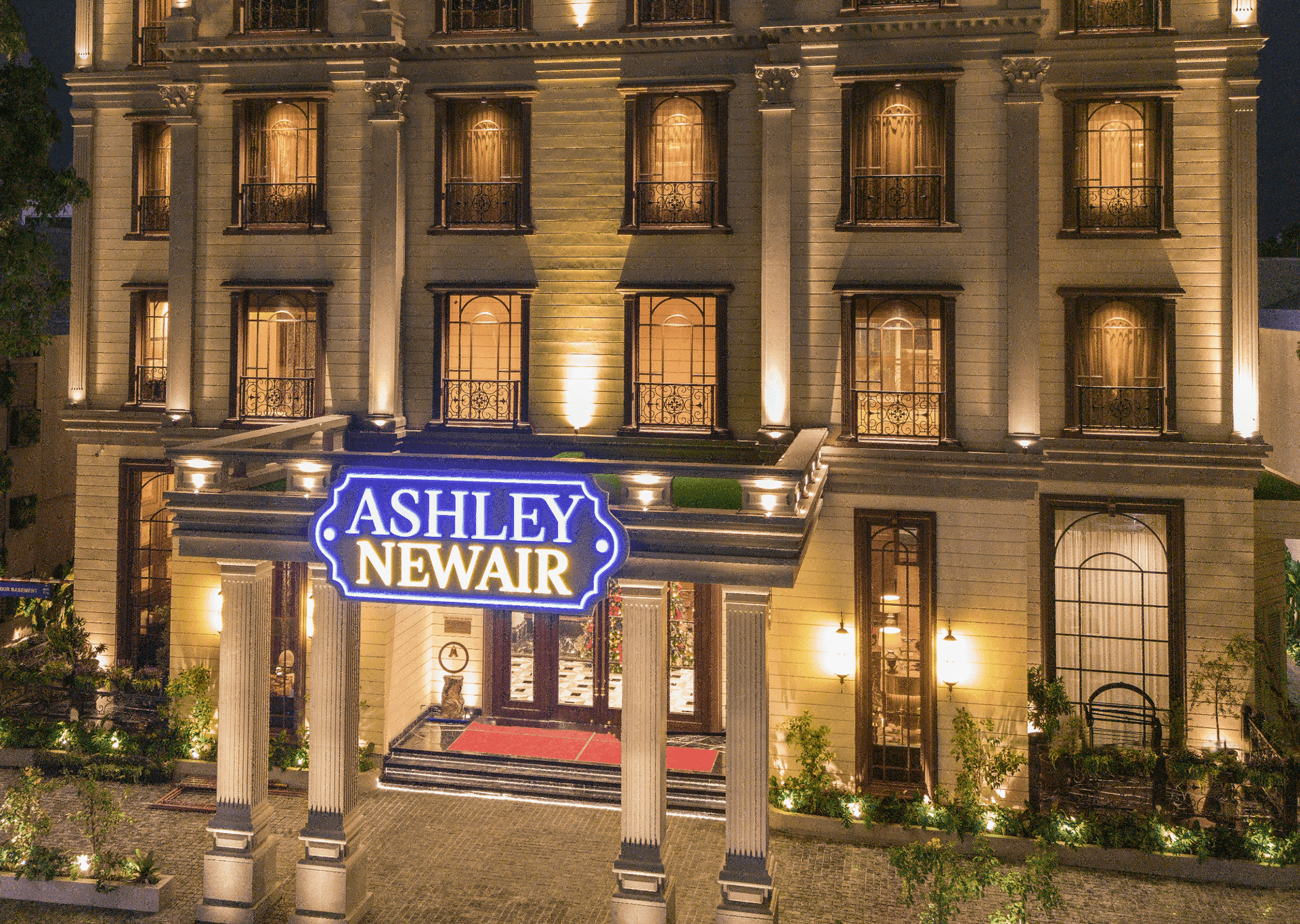
Ashley operates six hotels across Central Jakarta's most commercially active corridors — Sabang, Tanah Abang, Tang Menteng, Tugu Tani, Wahid Hasyim, and the newly launched NewAir Menteng. The brand is the same. The guests are not. Each location attracts a completely different traveller — business trips, family weekends, regional shoppers, international visitors — each with their own buying behaviour, search patterns, and reasons to book.
Ashley was acquiring all of them the same way. The same campaigns. The same messaging. The same landing pages. The auctions didn't differentiate. The spend didn't differentiate. And there was no way to know which property was actually earning the bookings that weren't already getting taxed by an OTA. Marketing was a cost line nobody could defend.
.jpeg&w=3840&q=75&dpl=dpl_Aps8ftHk9iUyBU72axBZLWXtdwXD)
Six hotels. One playbook. Six markets the playbook didn't fit.
Jakarta's mid-scale hotel market is dominated by OTAs taking 15–25% commission on every room. The hotels that escape that math are the ones that understand who they're selling to and reach them directly. Ashley had neither — not because they were doing anything wrong, but because they were doing the same thing for six different markets.
- One playbook. Six different guests. The corporate traveller booking Tanah Abang for a Tuesday client meeting and the family choosing NewAir Menteng for a weekend with the kids were getting the same ads, the same landing page, the same offer. Each guest needed a different conversation. None of them was getting it.
- OTAs setting the ceiling. Without a competitive direct channel, OTAs were the default — taking 15–25% commission on every room and owning the relationship with the guest. Every direct booking Ashley earned was worth meaningfully more, but there was no system to earn them at scale.
- Revenue was a mystery. There was no way to know which campaign, which channel, which property was actually driving room revenue. Marketing was a cost line that couldn't be tied to outcomes. Predictable revenue was impossible to build.
- A new property launching into thin air. NewAir Menteng was opening with no audience, no creative direction, no track record. It needed to launch alongside five existing hotels — and stand out in a market where most family hotels in Jakarta say the same thing.
Where Ashley was at takeover
When six hotels share one campaign, you're not marketing six hotels. You're paying the auction six times for the same guest — and learning nothing about any of them.GTMLab Performance Tram
It was never an ad problem. It was about knowing who we were selling to.
Most hotel engagements start with "which channel should we run?" We started elsewhere. Before opening a single ad account, we asked who actually stayed at each property — and why. Because once you know the answer, everything downstream gets a lot more obvious: which channels matter, what the creative should say, what each landing page should promise, what counts as a real conversion worth measuring.
The audit took two weeks. We mapped the actual guest mix at every property — business trips, family stays, regional shoppers, international visitors — through booking data, interviews, and conversations with each hotel's front-of-house team. Then we built in four phases, each one a layer Ashley still owns today.
1 Map the markets — six properties, six guests, six conversations.
Here is a problem almost every multi-property hotel group has, and almost none have solved: every property carries a different guest. A business hotel three minutes from a CBD client meeting is not selling to the same person as a family hotel two corridors over. Same brand. Same logo. Completely different conversations.
Most setups don't reflect that. One campaign covers everything, one creative addresses everyone, and the algorithm spends the budget trying to optimise for an average that doesn't exist. We refused to start that way.
Before we built any campaigns, we mapped who actually stays at each property — through booking data, guest interviews, and conversations with each hotel's front-of-house team. Once we knew the corporate traveller at Tanah Abang was nothing like the family at NewAir, the rest of the build had a clear shape. Measurement followed naturally — because we now knew exactly what to track and which guest to attribute every booking to.
- Guest mix mapped across every property. Business, family, regional shopper, international — each property's real audience surfaced, not assumed.
- Search and visibility signals audited at each location. What guests were typing, what they were finding, what they weren't, and where the OTAs were winning the click that should have been Ashley's.
- Measurement rebuilt to reflect real intent. The previous setup was passing clicks back as the conversion event — but a click is not intent, it's traffic. We rebuilt the signal so the ad platforms learned from bookings, not from people who landed on the site. The longer the campaigns ran, the smarter they got.
2 Build for each market — six everythings, not one.
Once we knew six guests, we had to build for six guests. That meant six versions of everything — keywords, copy, landing pages, offers — each tuned to the specific person each property was trying to win.
The instinct in multi-property hotel marketing is the opposite. One brand campaign, one creative, one budget. It is simpler to manage and looks acceptable on a blended dashboard. It also makes the algorithm work harder than it needs to, forces every property to compete against its own siblings in the auction, and produces a number that tells you almost nothing about what's actually working.
When the corporate traveller researching Tanah Abang stopped seeing the same ads as the family deciding on NewAir, the budget stopped being wasted on the wrong person. Two properties stopped bidding against each other for the same click. And every conversion got attributed cleanly to the campaign that actually earned it — which meant the next month's spend got allocated where it would compound.
- Per-property campaigns built across every channel. Each hotel its own keywords, its own copy, its own landing page, its own measurement. Six markets, six builds.
- Same ad spend, 40% lower cost per acquisition. Because each property finally had its own clean signal for the ad platforms to learn from — and stopped competing with its own siblings.
- Every booking traceable to the campaign that earned it. Leadership stopped asking what marketing was doing and started asking which property to scale next.
3 The new launch — finding the unique angle others couldn't claim.
In a market as competitive as Jakarta hospitality, sameness loses. Most family hotels say the same things — clean rooms, good location, fair price. None of that earns attention because everyone says it. A new property launching into that noise has weeks, not months, to find a reason to be chosen. Most agencies fold a new property into the portfolio, allocate a small budget, and let it "find its feet." We made a different call.
We asked a sharper question: what is the one thing a guest can do at this property that they genuinely cannot do at the hotel down the road? Not a slogan. Something specific, tangible, and ownable. We surveyed real Jakarta families, dug into what made them actually choose where to take their kids on a weekend, and found an angle no other family hotel in the city could honestly claim. We built the entire launch around it.
The campaign responded the way ads respond when they're saying something true to people who care. It became the highest-returning campaign in Ashley's portfolio — outperforming five established properties with years of paid history — and has sustained that performance into 2026 without a creative reset.
- The new property launched on its own terms. Its own audience, its own creative, its own positioning. Not folded into the portfolio — because the differentiation was real enough to earn its own strategy.
- The angle came from surveyed guests, not assumptions. A unique, tangible, ownable advantage no competitor could honestly claim — and the entire launch was built around it.
- The launch became the highest-returning campaign in the account. Sustained into 2026 without a creative reset — proof the angle was real, not a novelty effect.
4 International expansion — tested safely, without risking the core.
With the domestic engine compounding, the obvious next question was whether the same playbook would translate to international guests. Most hotel groups answer that by mixing international demand into existing accounts and watching the blended numbers slip while the team argues about whether the test is working.
We built the international expansion as its own isolated experiment from day one — separate budget, separate audience, separate measurement. The goal wasn't to win immediately. It was to give Ashley something they had never had: a clean benchmark for what international acquisition actually costs them and what return it actually delivers. International visibility lifted purchases across both the website and OTA channels, and Ashley now has a real data baseline to scale from when they decide to.
- International expansion built as an isolated 0-to-1 test. Separate budget, separate audience, separate measurement — so the domestic engine couldn't be contaminated by an experiment.
- First clean international benchmark in Ashley's history. Costs, returns, intent signals — all measured for the first time, ready to inform the next move.
- Overall purchases rose across both website and OTA. International visibility lifted the whole brand, not just the campaign that paid for it.
Who we targeted — and how we reached them.
This is the high-level cut. The working breakdown is roughly 10× more nuanced — each segment splits into sub-cells by intent, lead-time, price tier, location, and geo, each with its own landing page, ad-set structure, and funnel built per cell. The table below is the map, not the territory.
| Guest segment | What they actually care about | How we reached them |
|---|---|---|
| Corporate / Business Centrally-located city properties | "Is this hotel close to my meeting? Can I book direct without OTA friction and at a defensible rate?" | High-intent search at the moment of decision + a website experience built for the corporate booker — not the leisure shopper |
| Family / Leisure GuestNew property launch | "Is this hotel safe for my kids? What makes it different from the dozens of family hotels in Jakarta?" | Meta creative built on the unique, surveyed angle real families told us they cared about + a property-specific landing page that puts that angle front and centre |
| InternationalCross-border traveller | "Which Jakarta hotel fits an international stay — accessible, English-friendly, easy to book from abroad?" | Isolated international expansion test designed to produce the first clean cross-border benchmark — costs, returns, and intent measured cleanly for the first time |
The shift, before → after.
| Dimension | Before (Jan 2024) | After (2026) |
|---|---|---|
| Revenue | Unpredictable — OTA-dependent, 15–25% commission on every room, untraced to any campaign | Predictable, traced end-to-end — every booking attributable to the property, guest, and campaign that earned it |
| Budget | Marketing was a cost line — impossible to defend, impossible to optimise | Every dollar tied to a measurable outcome at the property level — leadership can see what the spend bought, branch by branch, month by month |
| Website | Generic, OTA-shopper-style experience — same for every guest at every property | Built around what each guest actually searches for and values — per property, per segment, per intent |
| Organic Visibility | 350K impressions — high view count, no conversion underneath | 646K impressions (+84% YoY) — and with ICP-targeted SEO driving real conversion, not just views |
How a guest moves through the Ashley system.
Results — 17 months in.
Six hotels, one performance system, and a direct channel that can be defended hotel by hotel to leadership. The headline numbers are ratios and deltas — every one of them traceable to a specific property, guest, and campaign.
Honesty note. The new property's launch campaign needed roughly eight weeks to produce a defendable signal — a cold-start window most agencies don't sit through, and the reason we built it on its own terms.
What seventeen months across six hotels taught us about hospitality marketing.
Four principles earned through decisions made under pressure — real budgets, real consequences.
Speak to who's buying — not what you're selling.
Most hotel marketing leads with the hotel: rooms, amenities, location, rate. Most guests don't care about those in isolation — they care about whether the hotel fits why they're travelling. The corporate booker wants to be three minutes from the meeting. The family wants to know their kids will be safe and entertained. The international guest wants to land somewhere accessible and easy. Lead with their reason. The room sells itself.
A blended number is where accountability goes to die.
When six different guests share one campaign, one dashboard, one budget, and one number, you have no idea what's actually working — only what's averaging out. Predictable revenue is not built on averages. It's built on knowing exactly who is buying where, and matching the spend to that. The dashboard your CFO can defend has six lines on it, not one.
A new property with no audience is the best brief you'll ever get.
A cold start with a genuine angle is not a liability — it's the cleanest brief in marketing. No legacy creative to undo. No "kind of working" campaigns to defend. Just a chance to find what the property genuinely owns, build the launch around that, and let it earn its audience from day one. The discipline isn't surviving the cold start. It's having the conviction to build it properly.
Run experiments where they can't hurt the core.
International expansion, a new channel, a new audience — every one of them is a guess at the start. The cost of mixing them into proven accounts is collateral damage when they don't work. Isolated, the experiments teach you exactly what you need. Mixed in, they teach you nothing and quietly bleed the wins next to them.
Seventeen months in, Ashley Hotel Group has a channel they own — every booking traced to the guest, the campaign, and the property that earned it. The OTAs no longer set the ceiling. a channel they own Seventeen months in, Ashley Hotel Group has a channel they own — every booking traced to the guest, the campaign, and the property that earned it. The OTAs no longer set the ceiling.
Organic visibility now drives conversion, not just views. The newest property continues to scale. The international benchmark is live. This is how GTMLab partnerships work: we map the markets, build the system, earn the velocity, and hand back a machine the client owns.
Book a strategy call →