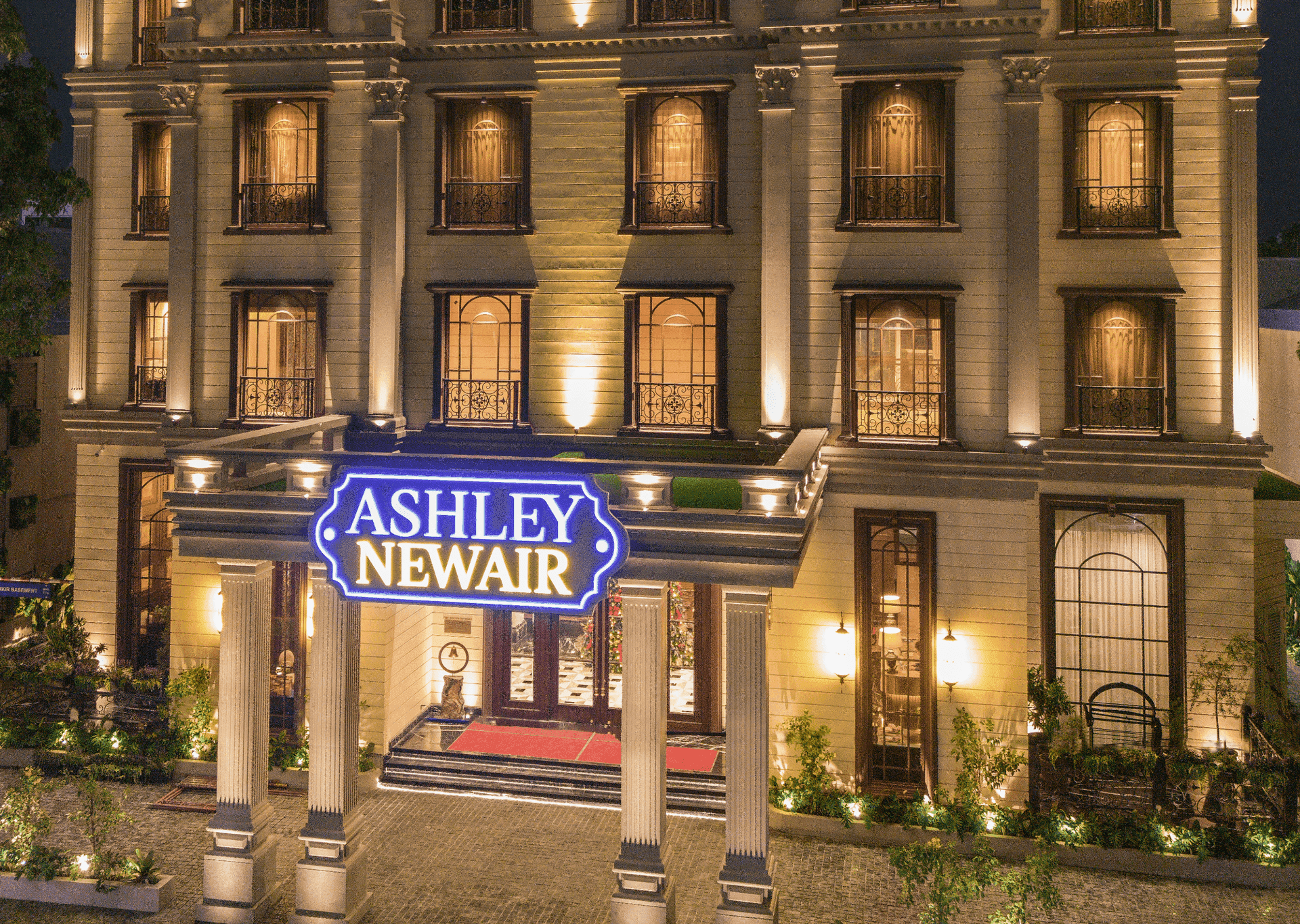
We worked with Jakarta Aquarium & Safari (JAQS)— the flagship urban edutainment property of the Safari Group portfolio (Taman Safari, Bali Marine, Bali Safari). JAQS had a category-leading consumer brand and a B2B sales pipeline trapped inside the personal networks of its sales team: capped, unpredictable, and impossible to scale.
In under 30 days, GTMLab designed and deployed a multi-channel B2B lead engine across Email, LinkedIn, Cold Call, and WhatsApp — delivering 15 BANT-qualified meetings, a 7–8× ROI on engagement investment, and a documented acquisition system that keeps producing qualified pipeline.
Meet Jakarta Aquarium & Safari.
JAQS is one of Indonesia's leading edutainment destinations — strong consumer brand recognition, high individual-visitor traffic across family and tourism segments, and structural backing as part of the Safari Group portfolio. The B2C demand engine is healthy and profitable; the venue itself is a category-leading product.
The market it sells into is large but hard to reach. Indonesia's school-trip and corporate-event market is fragmented and decision-maker-heavy — schools route through principals and curriculum coordinators, corporates through HR, employee-experience, and events leaders, tourism groups through agency owners. Reaching the right person takes segmented messaging engineered to each decision-maker's actual concern; without that segmentation, outbound is just generic noise that converts no one.
The problem — a brand without a system.
JAQS arrived with a contradiction: a consumer-side brand pulling high visitor traffic, paired with a B2B pipeline that depended entirely on who the sales team personally knew. Schools and corporate buyers — the scalable revenue tier — were a bottleneck precisely because there was no system to reach them at scale.
- Network-dependent acquisition. The B2B pipeline relied almost entirely on the sales team's personal Rolodex. That's a hard structural ceiling: the addressable market equalled the contact list. Outside that list, JAQS was invisible to the buyer.
- No ICP framework. Schools, corporates, and tourism groups were treated as one undifferentiated pool. The same generic pitch went to an international-school principal and a corporate HR lead — converting neither, because the value proposition for each is structurally different.
- No qualification system. Whatever leads surfaced weren't pre-screened. The sales team burned hours on prospects without budget, decision authority, or a viable booking window — a productivity drain that compounded the network cap.
- No multi-channel system. Acquisition was reactive and single-channel. There was no outbound engine, no email cadence, no LinkedIn motion, no cold-call playbook against which demand could even be tested.
At takeover
- B2B acquisition — network-bound — High
- ICP / segmentation — Critical
- Qualification system — Critical
- Multi-channel outreach — Critical
The build — three phases, under 30 days.
We started with the bottleneck question: was the pipeline weak because of demand, supply, or routing? Discovery confirmed it was a routing problem. Demand existed — school trips and corporate events are recurring high-value categories. Supply existed — JAQS is a category-leading venue. But the connection ran exclusively through the sales team's Rolodex. The job was to replace "who we know" with "who we should target," build the engine to reach them at scale, then qualify them so every handoff was meeting-ready.
1. Week 1 · ICP discovery + per-segment playbooks
Strategic reasoning
Mapped the three highest-potential ICPs and built a distinct playbook for each — before a single message went out, so no day of the sprint was spent on the wrong audience.
- Schools. Sub-segmented into four cohorts (national, international, private, religious), each with a different decision-maker structure and event driver; led with safety, curriculum integration, and structured student engagement.
- Corporate buyers. Sub-segmented by experiential-event budget profile, focused on enterprises with established team-building, employee-experience, or CSR programs; led with team-building formats, venue uniqueness, cost efficiency per attendee, and CSR alignment to conservation themes.
- Tourism agents and group operators. Partnership-economics buyers who package JAQS into multi-venue or multi-day offerings; led with partnership economics, packaged-offering revenue, and a repeat-booking framework.
2. Weeks 2–3 · Multi-channel outreach + BANT pre-qualification
Strategic reasoning
Email for scale, LinkedIn for credibility-led decision-maker access, Cold Call and WhatsApp for warm-conversion close — every touchpoint pre-engineered to qualify on BANT before any meeting was booked. The first BANT-qualified meeting was handed off in Week 2.
- Email. Personalised cadences with different subject-line architectures, openers, and CTAs for principals vs. HR leads vs. travel agents.
- LinkedIn. Credibility-led outreach to school heads, corporate event leads, and agency owners.
- Cold Call & WhatsApp. Cold-call scripts tailored per segment, because the corporate-event script and the school-principal script can't share a line and convert the same; WhatsApp for direct, conversational follow-up that warms a prospect between touchpoints.
- BANT screen. Every conversation pre-screened on Budget, Authority, Need, and Timeline — only BANT-pass leads reached the JAQS sales team.
3. Week 4 · Insights compounding + Systemitization
Strategic reasoning
A 30-day engagement is only valuable if the model survives it. By close, 15 qualified meetings were cumulative and the engine was documented and live.
- Daily dashboards. Volume, qualification status, and conversion trajectory by segment, with a weekly leadership review.
- Conversion intelligence. Industry-by-industry insight on which school sub-segments and corporate verticals passed BANT cleanest.
- Documented system. Winning message frameworks by ICP, the BANT rubric, and the reporting cadence — handed back so JAQS keeps the engine running.
The 30-day window was the constraint that forced discipline — segmentation, messaging, and qualification ran concurrently, not sequentially.
One venue, three reasons to buy.
The high-level cut. Each segment ran its own messaging architecture, sequencing, and qualification logic underneath.
| ICP segment | The concern driving the decision | The value proposition that landed |
|---|---|---|
| Schoolsnational, international, private, religious | "Is this a structured learning experience or just a field trip? Will parents pay for it, and can I defend it to the curriculum board?" | Repositioned JAQS as a curriculum-aligned learning environment, not a venue. Safety credentials, conservation-themed learning modules, and student-engagement design surfaced before any pricing talk — so principals engaged it as an academic decision, not a logistics one. |
| Corporate buyersHR / experiential-budget profile | "How is this different from a hotel ballroom? Will the team actually engage, and does it fit our CSR or employee-experience narrative?" | Made venue uniqueness the entire pitch — "team-building inside an aquarium" as headline, CSR alignment with marine conservation as the closer. Cost efficiency per attendee came last, not first, because the experience was the reason. |
| Tourism agents & operatorspartnership-economics buyers | "What's in this for us as a partner? Can I package it cleanly into a multi-venue offering, and is there repeat-booking economics?" | Led with partnership economics and packaged-offering revenue — the agent isn't selling a ticket, they're packaging an experience their customers return to. The pitch reframed the agent from "buyer" to "distribution channel." |
| Ruled outunsegmented "corporate" inbound | "Tell me what this costs." Price-led inbound from unsegmented sources surfaced low-fit prospects without venue alignment or experiential budget. | Disqualified early in Week 1. Segmentation isn't just who we chase — it's who we don't. The 30-day window doesn't survive low-fit conversion churn. |
Before and after, in 30 days.
| Dimension | Before — network-dependent | After — 30 days on |
|---|---|---|
| B2B acquisition model | Network-dependent — the sales team's Rolodex was the addressable market | Multi-channel outbound engine — Email + LinkedIn + Cold Call + WhatsApp, ICP-segmented across 3 playbooks |
| ICP segmentation | Single undifferentiated pool — "corporate or school" treated as one bucket | 3 distinct ICP playbooks — schools (4 sub-segments), corporates, tourism agents — each with its own messaging |
| Lead qualification | Ad-hoc — manual triage, no scoring rubric | Structured BANT pre-screening — every handoff verified on Budget, Authority, Need, Timeline |
| Performance visibility | Limited — tracked at the rep level, no leadership rollup | Daily dashboards + weekly leadership reviews + industry-by-industry conversion insight |
| System durability | Undocumented — the motion lived in reps' heads, nothing to hand on | Documented playbooks, BANT rubric, and reporting cadence the team runs in-house |
| 30-day pipeline output | Network-cap-bound, unpredictable, no scaling lever | 15 BANT-qualified meetings · 7–8× ROI on engagement investment |
A quality funnel, not a volume one.
This is engineered to prioritise qualification depth over outreach breadth. Volumes per channel were deliberately compressed; conversion rigour was deliberately elevated. The output is a meeting-ready handoff and a 7–8× ROI — not an inflated CRM count.
[Funnel diagram — replace with a screenshot.]
- Pre-qualified pipeline. The sales team didn't spend a single meeting establishing Budget, Authority, Need, or Timeline — every axis was verified before handoff. The meeting started on value alignment, not discovery.
- Segmented value proposition. Principals didn't hear a corporate pitch; corporate buyers didn't hear a curriculum pitch. Each meeting opened on a value proposition engineered for that exact decision-maker.
- Context briefs per handoff. Every meeting transferred with a written brief — segment, decision-maker role, identified concern, BANT evidence, suggested opening frame. The sales team walked in primed.
- A documented system as the deliverable. The 7–8× ROI captures the engagement window; the playbooks, BANT rubric, and reporting cadence keep producing pipeline after it.
Results — 30 days in.
Off network dependency, into a documented, scalable engine.
Honest read: the 30-day window was the constraint that forced discipline. Multi-channel outbound run sloppily in 30 days produces noise — high volume, low conversion, an exhausted sales team. We compressed by skipping nothing and running segmentation, messaging, and qualification concurrently, and we deliberately capped outreach volume to protect qualification rigour. Every one of the 15 meetings was meeting-ready — and that's the lever that makes 15 meetings produce a 7–8× ROI, where an unqualified 50-meeting result would have produced a fraction.
Four principles this engagement proved.
- "Who we know" is a ceiling. — JAQS's pipeline wasn't capped by weak demand — it was capped by the contact list. Reframing acquisition from network-dependent to ICP-targeted was the single largest unlock, and it's a 30-day project, not a 12-month one, when the playbooks are designed before outreach begins.
- Segmentation isn't a slide — it's a different message per decision-maker. — Schools optimise on safety and curriculum; corporates on venue uniqueness and CSR; agents on partnership economics. Same venue, three different reasons to buy. Treat them as one ICP and the message is wrong for everyone at once.
- BANT is the lever that turns small numbers into large outcomes. — 15 qualified meetings produced a 7–8× ROI; the same 15 unqualified would have produced a fraction. Pre-qualification is the multiplier that turns meeting count into revenue impact. Volume is vanity; qualified handoff is the unit economics.
- A 30-day engagement is only worth what it leaves behind. — The visible result is the meetings and the ROI. The compounding result is the playbooks, message frameworks, BANT rubric, and reporting cadence JAQS now runs internally — an engine that keeps producing pipeline long after the sprint.
30 days in, JAQS had 15 BANT-qualified meetings, a 7–8× ROI, and a documented engine that keeps the qualified pipeline coming.
This is how GTMLab partnerships work: we don't sell outreach volume, we don't sell vanity meeting counts — we build the system that respects your sales team's time and produces revenue-grade pipeline. We take ownership, we close the first qualified meetings, and we hand back a machine that compounds — one your team can run without us in the room.
Book a strategy call →