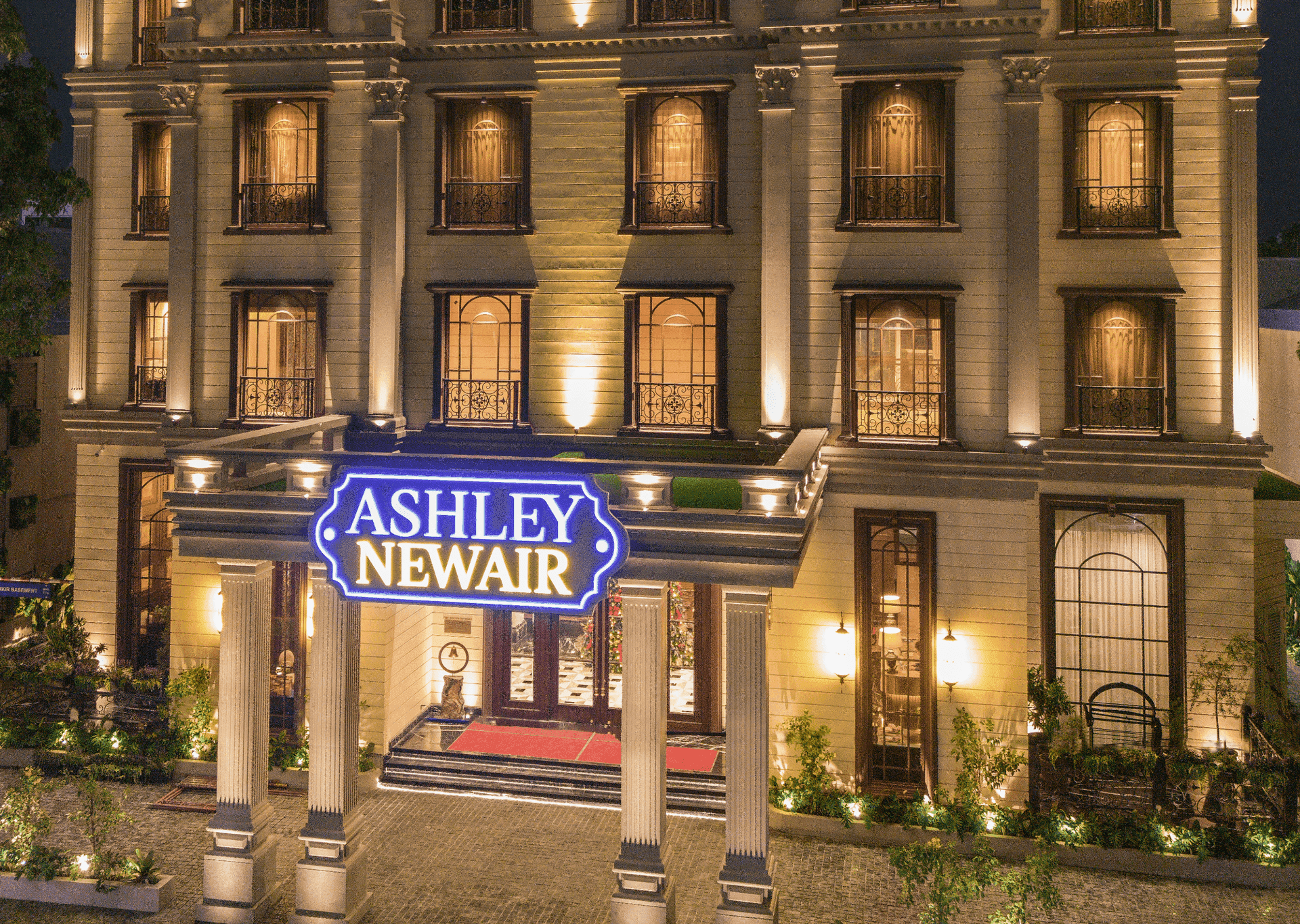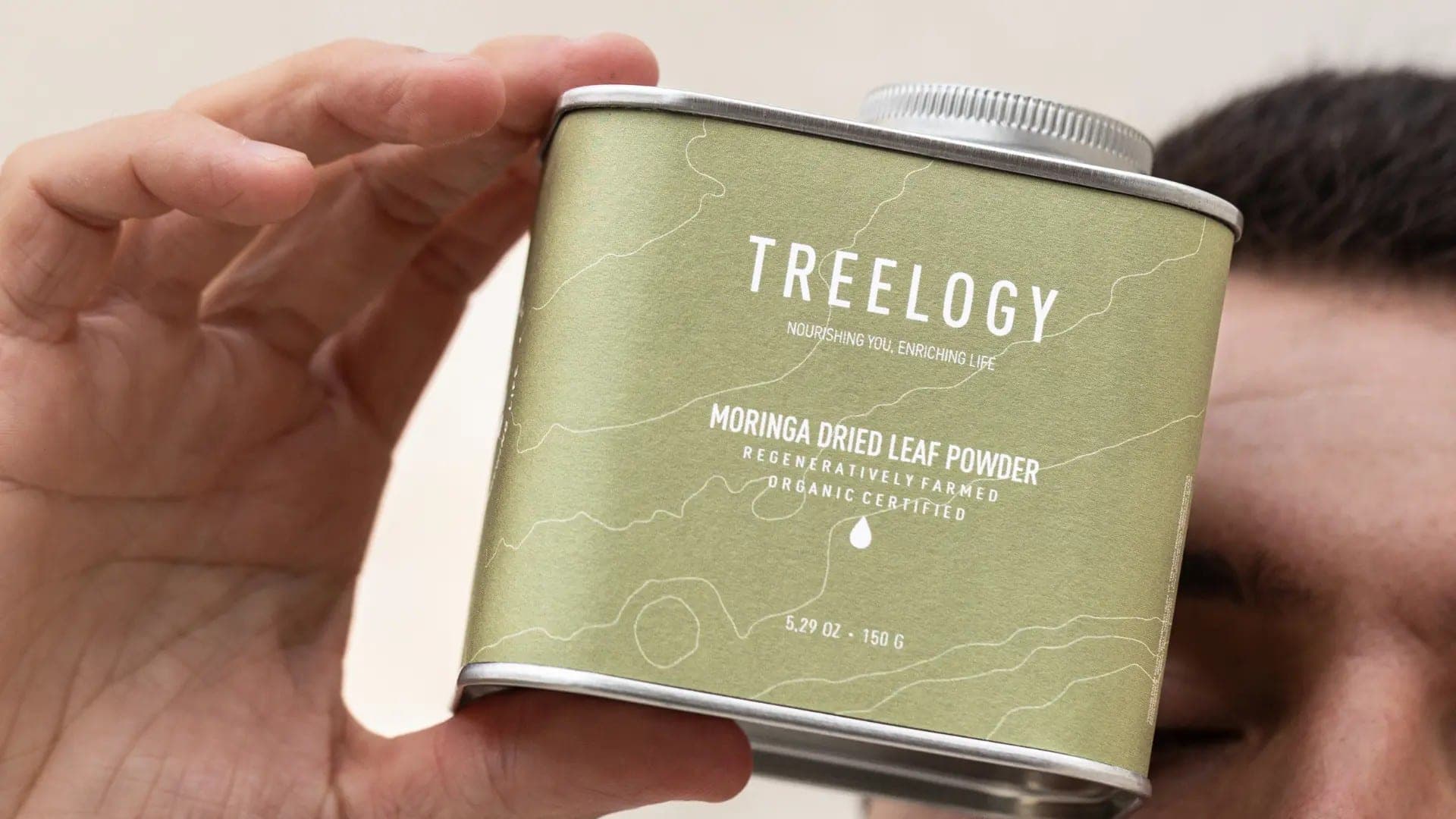
Treelogy is a D2C moringa wellness brand — oil, powder and capsules, sold across South East Asia, with its strongest pull among an older, joint-pain wellness buyer. The repeat side of the business was healthy: people who tried it kept reordering. The hard part was new customers — and it got harder the moment spend scaled.
The reason wasn't the product or the audience. It was the creative. The account ran a narrow set of ad styles on loop, so as budget went up it hammered the same people with the same few ads — frequency climbed, costs rose, and new-customer acquisition stalled. We also found the brand was selling oil, powder and capsules to “everyone” with one generic pitch, when each line speaks to a different buyer and a different pain. This page is the rebuild: how we segmented the ICP by product line, then turned a pile of one-off ads into a creative system that remembers what wins and feeds proven angles back at volume, so acquisition scales instead of saturating.
Meet Treelogy.
Treelogy sells moringa-based wellness across South East Asia — oil, powder and capsules — with its strongest pull among an older, joint-pain-led buyer. The repeat business was healthy. The growth job was new customers, and it got harder every time spend scaled, because a narrow set of recycled ads gave the algorithm nowhere fresh to go.
They had the answers. The account just kept forgetting them.
The strange part is that the winners weren't hidden — the data had already pointed to the formats and angles that worked, some of them dramatically. What was missing was anything to make that knowledge stick. Proven creative wasn't feeding the next round, diversity was thin, and the best performers were often cut before they could scale. So the learning never compounded — the account paid to discover the same thing twice. Three traps kept the proof from ever compounding.
- No creative memory. Proven angles never fed the next brief. Production restarted from zero each cycle, so the account kept re-learning what it already knew.
- A format monoculture. One dominant style ran almost everything, even though statics out-converted video several times over. The algorithm was starved of creative diversity — so as spend scaled, it had nowhere fresh to go and saturated the same audiences.
- Winners killed too early. The best creatives — a joint-pain static, the “5 Reasons” list — were pulled or under-tested before they ever got the budget to scale. The account cut its own winners.
You can't scale new-customer acquisition on a handful of ads. Pour spend into a monoculture and you don't reach more people — you just wear out the same ones.The reframe behind the rebuild
Acquisition at scale is a creative-diversity problem before it's a budget problem. A narrow set of ads gives the algorithm almost no room to find new pockets of audience, so every extra dollar lands on people who've already seen the ad — frequency rises, cost rises, returns fall. The fix isn't more spend or one more hero ad. It's a steady supply of diverse, proven-angle creative, so the algorithm always has a fresh door to knock on.
The principles we rebuilt the creative on.
- Build a creative memory. Every proven angle becomes a reusable starting point, not a one-off. The next brief begins from what already won — so the learning compounds instead of resetting.
- Judge creative on ROAS, not CTR. A quieter static that returns more beats a flashier video that returns less. We scored creative on what it sold, not how many clicks it earned — and the winners changed.
- Feed the algorithm diversity. Multiple proven angles and formats in market at once — problem/solution, joint-pain, “5 Reasons,” comment-style, notes — so scaling spend opens new audiences instead of exhausting one.
- Give winners room to prove out. A creative returning strongly on a small budget gets funded, not cut. We stopped killing winners before they could carry the account.
- Match the avatar to the product line. Oil, powder and capsules don't sell to the same person. We segmented the ICP per product — joint-pain, fatigue, immunity, menopause — so each line meets its own buyer with its own angle, not one generic moringa pitch.
Then we expanded who the buyer could be.
Segmenting the existing buyer was the first job. The bigger one was reaching people the brand had never spoken to. Moringa skews older and joint-pain-led — but the category isn't limited to them, and a business that only ever sells to its current avatar caps its own growth. So we deliberately tested formats built for audiences outside the core demographic. On the oil, UGC built to feel native to a younger feed, pulling buyers well outside the older core. A viral AI-video format engineered for scroll-native reach a static-only account could never earn. Trending video built on cultural moments to land with people who scroll past polished supplement ads. A first full animated performance creative that broadens appeal past the category's usual before-and-after look. Street vox-pop UGC that feels like content, not an ad. And creator collaborations that borrow a creator's ready-made audience the brand had no other way in to. These are expansion bets, read on early signal — reaching a new audience takes more cycles to prove than refreshing a known winner. The point is widening who the brand can profitably reach, not replacing the core that already works.
Before — a narrow set on loop.
The old account leaned on a handful of styles, judged them on the wrong metric, and forgot its own winners. The kind of creative the rebuild replaced.
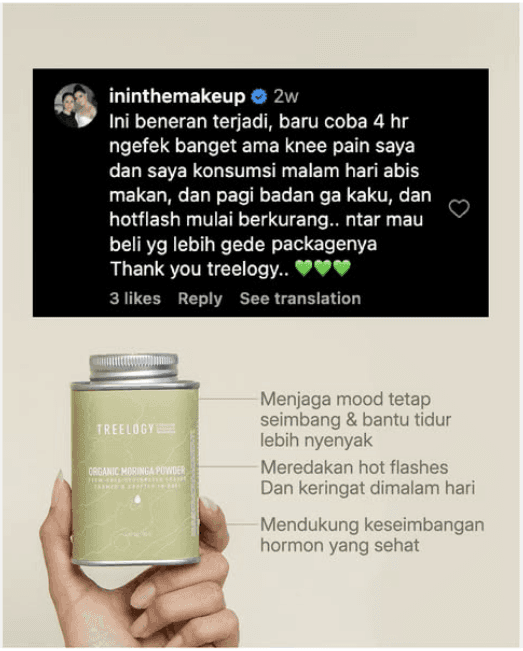
Comment-screenshot social proof
The proof is real but it's a buried low-engagement comment, presented with no offer or next step to act on.

Testimonial static, product in hand
The relationship story is the right instinct, but it stops before the sale with no offer and no next step.
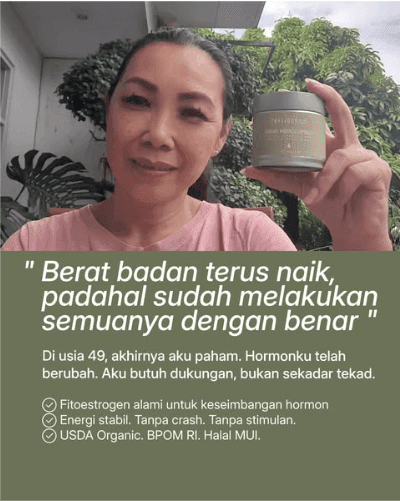
Testimonial static + benefit list
It runs a pain hook and a credentials list at the same time, so nothing anchors the eye and there's still no ask.
After — proven angles, fed at volume.
A diverse set of data-proven creatives, each ported and refreshed off what already won.
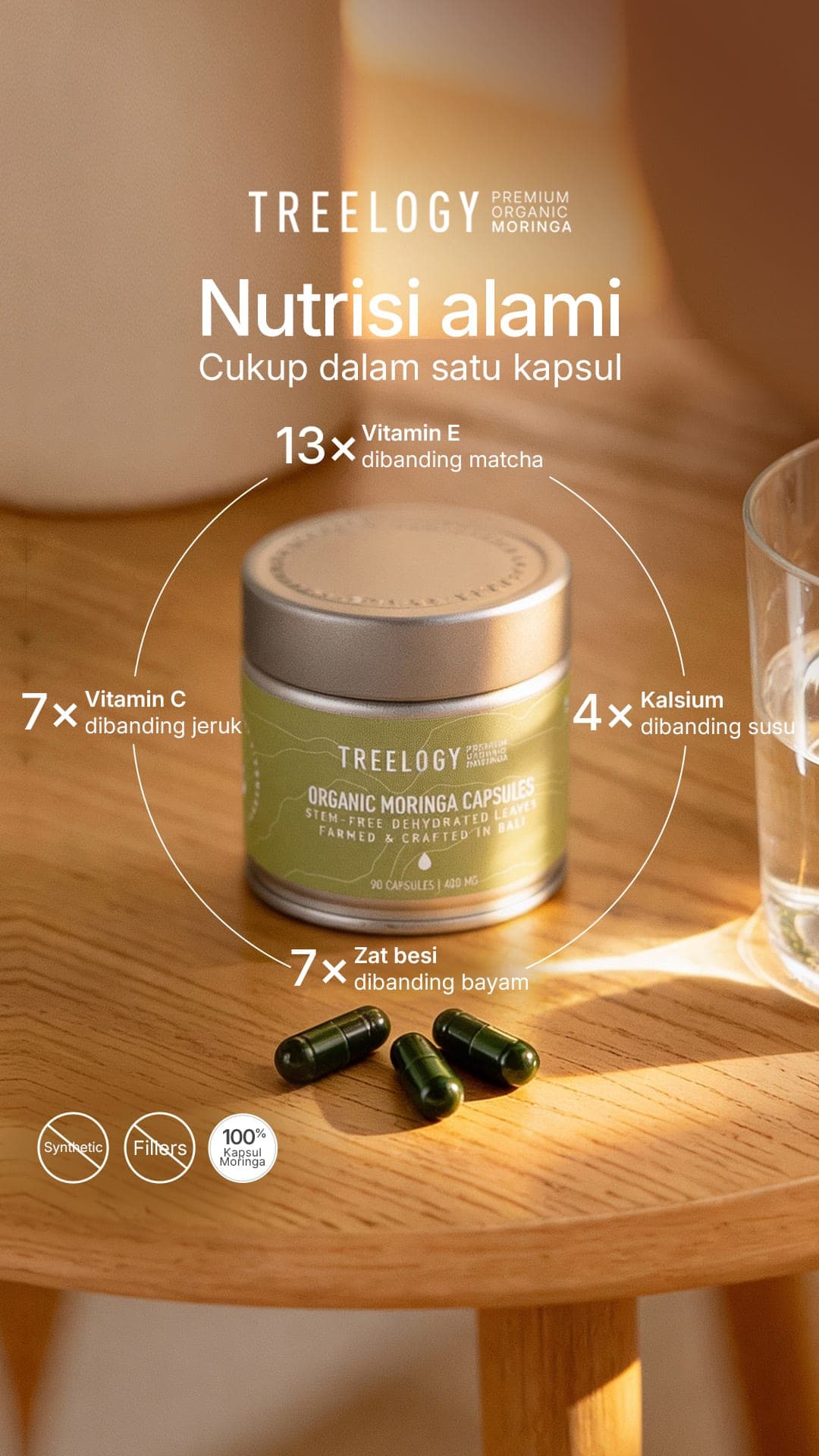
Nutrient-comparison static
Turns the whole product into one scannable claim, with the hero shot and "no synthetic / no fillers" badges doing the trust work at a glance.

How To Dosage
Answers the unspoken "how do I actually take this" before purchase, which removes the friction that kills first orders for an unfamiliar supplement.

Product-led benefit static
Pairs a relatable older-woman avatar with a clear nutrient stack, so the buyer sees herself and the proof at once.
Trend Based - Before-to-after Transformation AI Video
Shows the shift from worn-down to moving-easily without a word of claim, so the buyer reads the benefit as lived rather than told.
Trend Based - 3D-animated AI Video
Turns an invisible internal benefit into a character-driven story the eye can follow, so a how-it-works claim lands as engaging instead of clinical.
Trend Based - Product Demo AI Video
A fresh hook on a proven angle — the next test, started from what already worked.
Getting a winner isn't the finish line, acts as the starting point. It's the first iteration of many, each one built off the last, so learnings and results compound.
Every brief starts from the account's proven angles, then varies the levers that move a supplement buyer. On angle, we test problem/solution, joint-pain, “5 Reasons,” testimonial, product-led, comment-style and notes/discovery. On format, static, VSL/video, UGC, animation and hook variants. On product line, oil, powder and capsules. On audience and pain, the joint-pain avatar, fatigue, immunity, menopause, and cold versus warm.
The same winner, now in creator hands — three iteration UGC
UGC - Voiceover - Single-ingredient Routine
Carries the oil's single-ingredient story in a creator's own voice, native to a younger feed, and shows skin and hair use in one pass so the dual-use payoff lands without a hard sell.
UGC - Textover - Silent Night-routine
Opens on a visual pattern-interrupt instead of a claim, then rests the whole spot on one idea, so it stops the scroll where a polished, copy-heavy ad gets skipped.
UGC - Talking Head - Dry and Sensitive Skin
Runs the oil through the account's proven problem-to-proof arc and names the skin type out loud, so the right buyer recognises herself and the four-week result reads as evidence, not a claim.
All three are UGC, run as iterations off one proven angle, the single-ingredient oil. UGC is the format the static-led account never tested at volume, so the job here is to find out which creator treatment actually moves the newer, younger buyer, not to ship one cut and hope. Same product, same core claim, three variables under test: the hook (audio open, visual pattern-interrupt, testimonial), the funnel job (educate, create curiosity, convince), and how tightly the pain is named (broad skin-and-hair, pure mood, dry-and-sensitive specific).
This is the rebuild's own method applied to a new format. The test is the strategy: each cut is an experiment, read on its own signal, and the ones that return get refreshed and fed back while the ones that don't get cut. UGC takes more cycles to prove than refreshing a known static winner, and the softer-CTA cuts lean warm by design, so these are read on early signal, not final ROAS. The point is to build a UGC memory the same way the account built its static one, so creator-led acquisition compounds instead of restarting every brief.
Every creative earned its place — or got cut.
The test is the strategy. We ran creatives as experiments and let the data decide which scaled, which evolved, and which died — because knowing what to stop is half the system.
| Experiment | Verdict | What the data said |
|---|---|---|
| “5 Reasons” list staticWinner | Best performing · 1.7× the average ROAS | The highest-returning creative on the whole account — and it had barely been tested. Now a full series, built around how a supplement buyer actually decides. |
| Problem/Solution staticScaled | Best volume on the account | The proven #1 angle. The unlock was iterating the copy, not reinventing the visual — so we kept refreshing the line, not the layout. |
| Joint-pain staticEvolved | 2.90× on a small budget | Proven on Powder, then ported across to Capsules — the core-avatar angle re-funded after being cut too early. |
| AI-testimonial creativeKilled | High clicks, weak return | Earned attention but didn't convert — the leak was the post-click, not the ad. Paused until the landing page and offer were fixed, rather than scaled on a vanity metric. |
Pausing the AI-testimonial mattered as much as scaling the “5 Reasons” static. A high click-through rate on a creative that doesn't sell is a trap — chasing it would have poured spend into clicks, not customers.
What changed — business as usual vs the engine.
| The job | Business as usual | What we built instead |
|---|---|---|
| What we test | Feature announcements and a narrow set of styles, repeated | Proven angles, varied and refreshed — problem/solution, joint-pain, “5 Reasons,” comment, notes |
| How we judge it | Click-through rate across formats — flashy video looked like a winner | ROAS by format and angle — a quieter static that returns more beats a louder video that returns less |
| What we remember | Restart from zero each cycle; winners forgotten | A creative memory — every proven angle feeds the next brief, so learning compounds |
| Why it scales | More spend hammered the same audience with the same ads | Diverse proven creative opens new audiences — so acquisition scales instead of saturating |
Results — the creative engine.
Six numbers that show the proof finally being acted on. ROAS is shown as a multiple; everything else is relative.
Honest read: there's headroom we're still chasing. UGC video and the wider-audience formats are newer bets, read on early signal rather than final ROAS — reaching a new audience takes more cycles to prove. The AI-testimonial post-click flow needs fixing before that angle scales, and several proven winners were cut too early and are being re-funded with proper budget. Numbers reflect the verified creative pull; we re-check against live data before anything scales.
What the rebuild taught us about creative at scale.
- A winner you can't remember isn't an asset. — Proven angles only compound if they feed the next brief. Without a creative memory, the account keeps paying to re-learn what it already knew.
- Judge creative on ROAS, not clicks. — A quieter static that returns more beats a flashier video that returns less. Measure what it sells, and the winners you scale change entirely.
- Diversity is how acquisition scales. — A format monoculture saturates one audience as spend climbs. Diverse, proven creative gives the algorithm new doors to knock on.
- Don't kill a winner on a small budget. — A creative returning strongly on little spend is a signal to fund, not cut. Give the proof room before pulling it.
Treelogy went from forgetting its own winners to a creative engine that remembers and scales them — proven angles fed at volume, so new customers come without the costs running away.
The account already knew what worked; now it acts on it — statics over guesswork, ROAS over clicks, and diverse proven creative that opens new audiences instead of exhausting one. The next job is the headroom: the wider-audience formats and the post-click fix that lets the testimonial angle run.
Book a strategy call →