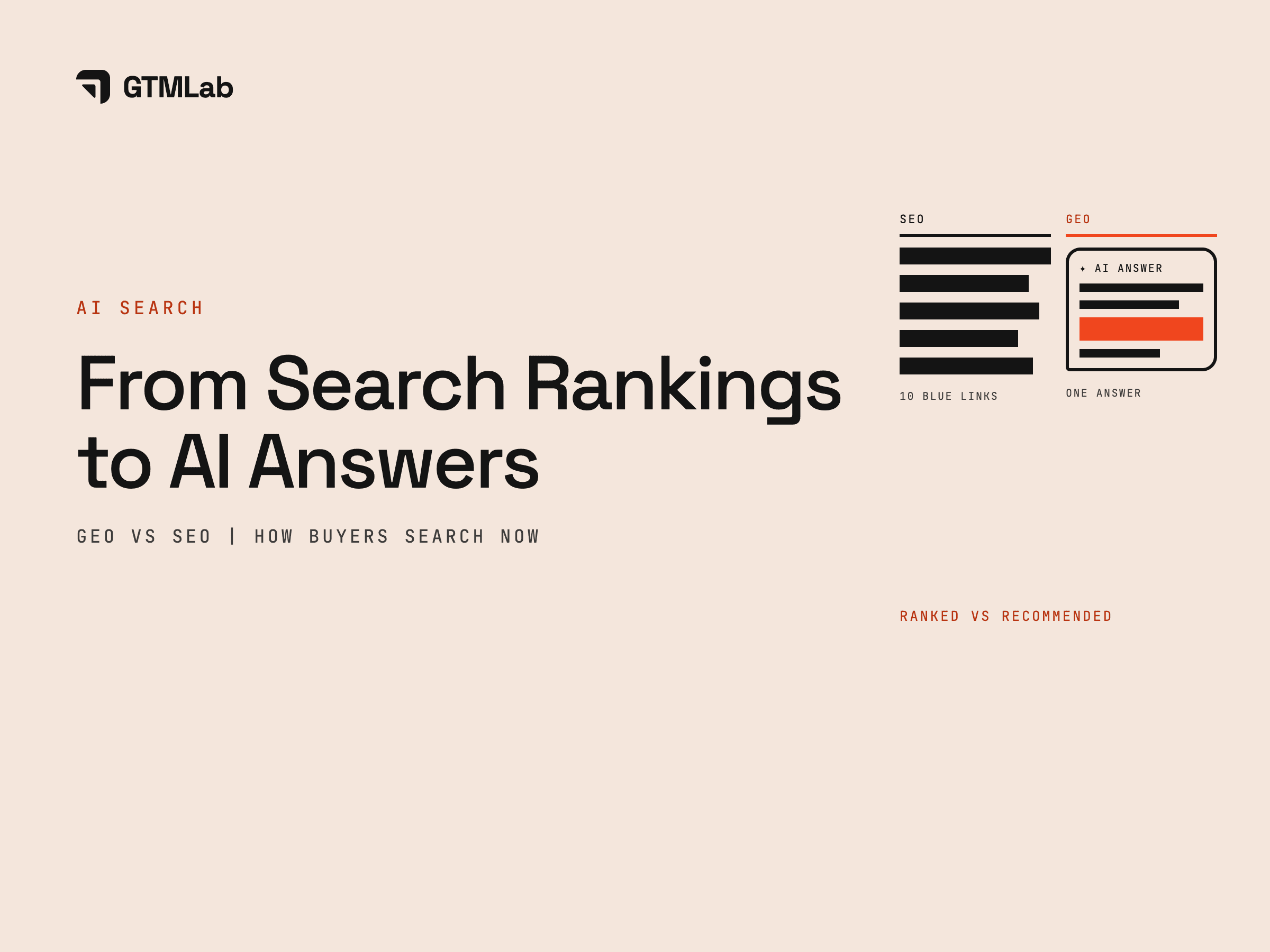
Search has changed from simply finding links on the internet to getting direct answers. AI can now provide answers of brand comparisons and even recommend brands without having buyers browse multiple websites themselves. Although it is more practical and convenient for buyers, this method creates new challenges. Being visible in Google’s search results is no longer the only way to reach potential customers.
From this shift, it has introduced us to Generative Engine Optimization (GEO) that leans more towards the strategy for a business to appear in AI-generated responses. This might slightly differ with SEO, though both of them often overlap and could influence buyer discovery to help your business to adapt search strategies to an increasingly AI-driven landscape.
How AI is changing the way buyers search
Nowadays, buyers don't solely rely on traditional search engines to browse websites and compare results. They can now ask AI tools to summarize information and recommend potential solutions in a single response.
Although a website may rank well on Google, it can still be absent from an AI-generated answer. Also, a brand mentioned in the AI platform can become part of a buyer’s consideration before they even visit its website. Therefore, visibility is no longer just about ranking on search engine results pages. It is also about providing information that AI systems can both understand and trust when answering relevant questions.
Is SEO replaced by GEO?
GEO is an approach to improving a brand’s visibility in AI-generated responses. Meanwhile, SEO focuses more on traditional search engine results. Both strategies rely on many of the same fundamentals, from technical accessibility to a clear understanding of user intent.
In this sense, SEO remains important because buyers continue to use search engines to research products and visit websites. Meanwhile, GEO adds another layer in helping brands expand their exposure when buyers turn to AI for answers and recommendations. Thus, GEO expands the scope of search optimization to account for how people discover and evaluate brands through generative AI.
GEO vs SEO
| Focus | GEO | SEO |
| Primary goal | Increase the chance of being cited in AI-generated answers. | Improve rankings on traditional search engine results pages (e.g. Google). |
| Where it appears | AI-powered search operations such as ChatGPT, Gemini, and Perplexity. | Search engines like Google, Bing, Yahoo search, and other search engine results. |
| How it works | Focuses on content clarity, credibility, factual accuracy, and inclusion in AI-generated responses. | Enhance website content by upgrading the technical performances, keywords, and backlinks. |
| Strategy | Should have direct answers while still providing contextual information from the experts. | Targets relevant keywords and search intent. |
| Key metrics | AI mentions or citations, as well as share of voice in AI responses. | Through the organic rankings, clicks, and impressions. |
On the bottom line, GEO vs SEO operate on different surfaces but still share the same goals, which is getting leads.
Most of the key focus overlaps as they give a similar approach of content visibility through different platforms. Instead of treating one of these optimization methods as an alternatives, they could work complementarily in expanding the chance for your website to gradually expand its exposure.
Signals unique to AI engines
1. Clear and Direct Answers
Buyers often use AI tools when they want to get specific answers or for when they need AI to compare brand options. Therefore, content that addresses these questions directly can make relevant information easier to identify and understand. It is best for you to use concise explanations and supporting details to answer users’ questions without unnecessary fillers.
2. Credible Sources and Expert Insights
It is important to note that a content should be trustworthy enough to be considered in AI-generated responses. Thus, the page itself needs to include relevant data and have reliable sources. Fact-proven information inside your page can increase the chance for AI to reference it to answer the buyer’s queries. You can also add genuine expert insights to strengthen the credibility of the page.
3. Consistent Brand Information
When creating a website, your brands need to have a consistent description of the products and services to reduce conflicting information across other online sources. Consistent information could increase AI trust on your products. Thus, it is ideal to regularly check your business’ contents across different platforms to ensure the brand information remains accurate and clear.
4. Structured and Accessible Content
Well-organized content helps both users and automated systems navigate information. AI tools can easily interpret pages that have more logical content hierarchies and are technically accessible. These practices complement traditional SEO while supporting a website’s overall discoverability across search experiences.
Can SEO and GEO work together?
SEO and GEO are able to collaborate as complementary strategies rather than competing priorities. When the page includes relevant content and a strong understanding of search intent, it can support both traditional search visibility while also providing a foundation for AI discovery.
You can easily identify gaps in the search presence and prioritize improvements when utilizing both strategies. The measurement from both channels can be investigated from its own key metrics. As SEO seeks the results from organic rankings and conversions, GEO monitors the brand’s mentions and citations across relevant AI prompts.
Where should your business invest?
As search behavior evolves, it is best for you to start thinking beyond rankings alone. Rather than shifting all resources toward one approach, your business should assess the current search presence and allocate resources based on your business goals.
For your business looking to navigate this shift, having the right strategy can make the process more manageable.
GTMLab might be a suitable match for you if your business already has a consistent product and services catalogue but still struggles to expand its commercial performance. Through the team’s contribution, you can find out whether AI mentions your brand to answer a potential buyer’s prompt.
You can talk to the team about where AI names your business and find out more about commercial growth through these search optimization strategies.
Frequently Asked Questions
Can a brand appear in AI answers without having a high Google ranking?
Yes, because traditional search rankings and AI-generated visibility are not identical. AI systems usually retrieve information from different sources, and a page that does not rank highly for a particular Google query may still be referenced in an AIresponse.
What types of content are useful for AI search visibility when using GEO vs SEO?
Content that answers specific questions and provides useful context can be useful. For example, web pages that mention expert commentary, detailed guides, and product comparison can be functional for AI visibility. It is important to note that the format depends on the buyer’s needs and the subject matter.
Does website schema markup help with GEO?
Schema markup helps search engines interpret specific information about a webpage. It can support content understanding and eligibility for certain search features, but it does not guarantee that an AI system will cite or recommend a website.
Can AI-generated answers drive traffic to a website?
Yes, some AI-powered search experiences provide links or citations that buyers can click to explore a topic further. These referrals can bring visitors to a website when they want to investigate the answer in more detail.
Do AI search engines use the same sources to generate answers?
No, different AI platforms may process and prioritize information differently. There are responses that rely on web search results, while others may draw on a combination of retrieved sources and existing model knowledge. Therefore, a brand that appears in one platform’s answer may not necessarily appear in another.


