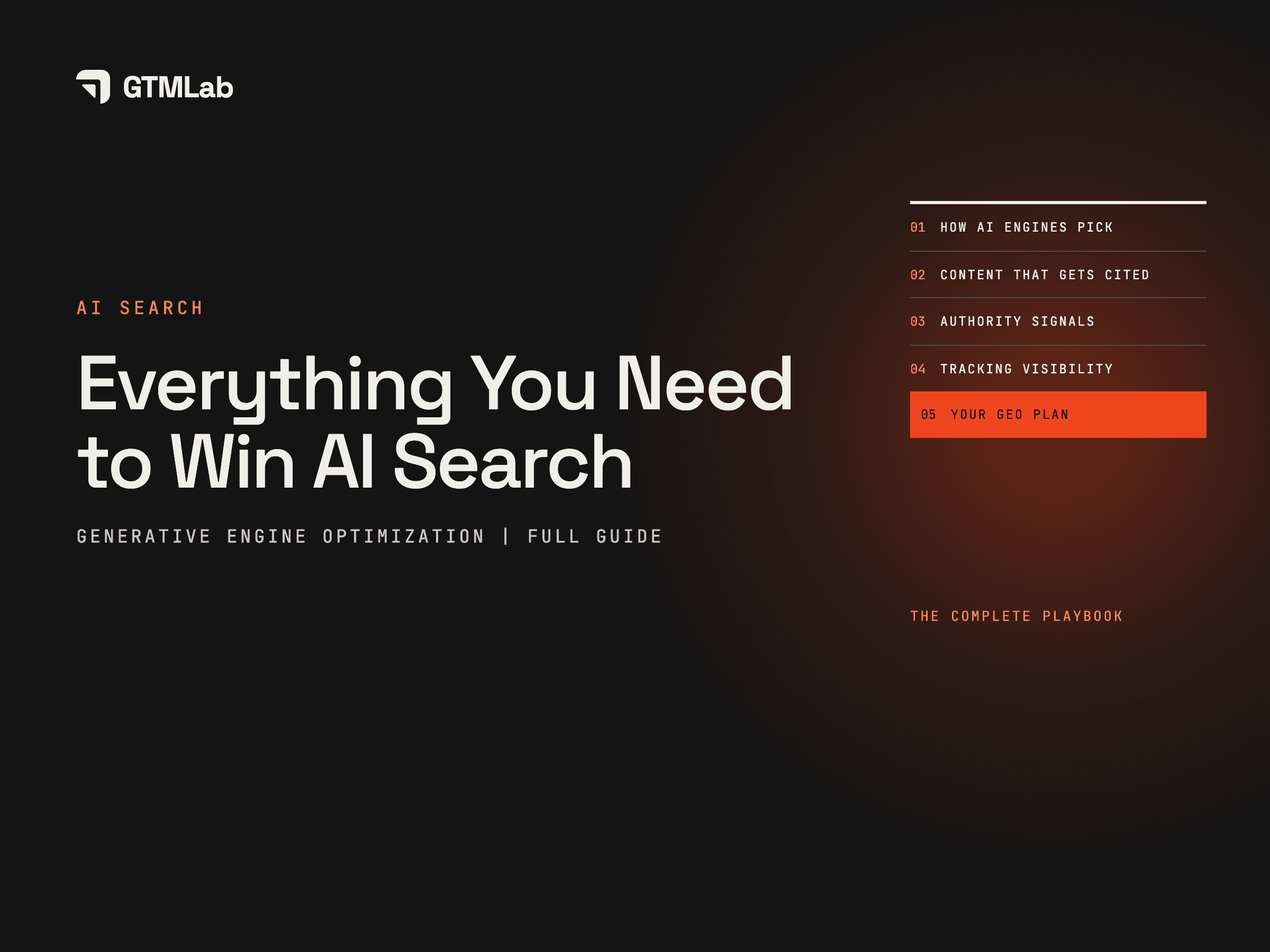
Nowadays, people can easily ask platforms such as ChatGPT, Gemini, Perplexity, and many other AI tools to summarize information and recommend relevant sources. Therefore, AI search optimization, or usually called generative engine optimization, becomes a practice that is often used to improve the content’s visibility through a direct conversational response.
In this guide to generative engine optimization, you will explore further how GEO works: from the strategy’s background to which factors of it influence AI search visibility. This way, you can utilize this GEO strategy to help strengthen your business’ online presence and adapt to the evolving search landscape.
What is Generative Engine Optimization?
Generative engine optimization, or GEO, is an optimization strategy that focuses on ranking businesses within AI-generated and chatbot responses. This practice aims for your content to be visible in Gen-AI such as ChatGPT, Gemini, Perplexity, or any AI tools’ generated answers. In this sense, AI systems can cite and mention the content if it’s relevant to the users’ questions.
Although it has similar principles as SEO, AI optimization focuses more heavily in getting citations of your brand to answer the users’ queries. Usually, these AI systems will provide brand references when users ask about recommendations or comparisons about certain products and services.
Is SEO Now Dead With AI?
Although the rise of AI-powered search has vastly evolved, traditional SEO is still relevant for helping web pages appear prominently in search engine results pages (SERPs). It involves keyword research and authority building to help search engines understand and rank relevant pages on every search engine tool.
On the other hand, generative engine optimization strategy helps for brands to be discovered or referenced in AI-generated responses. Rather than focusing on the page’s rank position in the search results, you will be more focused on whether your content contributes to the answers that users receive.
These two strategies are closely connected, even though the objectives may differ. For instance, Google confirms that their AI search features (AI mode & AI overviews) still rely on SEO fundamentals for pages to guarantee inclusion in Google’s AI features.
Factors to Rank With GEO
For GEO strategy, several factors can influence whether your content is useful and relevant to the generative search systems by observing the following components:
- Content relevance and information quality: Your business content should directly address the questions users ask by providing relevant explanations and accurate information.
- Clear structure and readability: Clear and concise headings, descriptive subheadings, and logically organized sections can improve communication of what each page on your website covers.
- Brand authority and credibility: Your business can practice building credibility through consistent brand information and expert-led content rather than exclusively on self-published claims.
- Technical accessibility: Regularly check your website’s crawlability, indexability, internal links, page performance, and content availability.
- Freshness and accuracy: Information such as product specifications, service offerings, pricing, industry development, and regulations needs regular review to prevent inaccurate descriptions of your brand.
- Contextual relevance and evidence: Make sure to have clear explanations when creating a content page for an AI system to easily evaluate and synthesize sources from your page.
How Generative Engines Choose Sources
The process of choosing sources varies across platforms, and not every AI tool uses live web retrieval. Thus, a simplified generative search workflow typically involves the following stages:
Interpreting the User’s Query
The system will first interpret the user’s question, including its intent, context, and any relevant constraints.
For instance, users may ask for a comparison or an explanation of a product. These requests require AI to interpret them differently so that they could address specific user needs rather than targeting keywords in isolation.
Retrieving Relevant Information
When a generative engine uses web search or another retrieval mechanism, it may identify pages, documents, and other sources that relate to the query.
This stage can be influenced by relevance, content accessibility, available search indexes, and the retrieval systems used by the platform.
Although a website’s traditional search visibility can help make its content discoverable, it does not guarantee that the page will be selected for an AI-generated answer.
Evaluating and Selecting Sources
You should know that different engines can select different sources for the same query. Their retrieval methods, models, available information, and citation practices are not identical.
Usually, the system may select information that appears useful for answering the question. Depending on the platform, this can involve assessing relevance, source reliability, topical alignment, and the usefulness of specific passages.
Therefore, it is best to note that different AI platforms will give different AI answers even when you request the same question to every chatbot.
Synthesizing the Response
A response might summarize several perspectives, compare products, outline a process, or recommend a shortlist of businesses. Depending on the platform, it may include citations or links to supporting sources.
At this stage, a brand can be relevant to the topic without being explicitly mentioned. Likewise, a website may be cited without its brand receiving prominent recommendation.
Displaying Citations
This part is where the AI platform presents its response, potentially alongside supporting links. You can see the visibility by the form of a brand mention, a citation to its website, an accurate description of its services, or a recommendation in a relevant comparison.
These outcomes should be measured separately because they represent different types of visibility.
However, the source selection itself is not entirely predictable. GEO is about improving the conditions that make your content useful and discoverable, not guaranteeing that an AI engine will select it for every query.
How GTMLab Works with The Generative Engine Optimization Growth Strategy
At GTMLab, our team tests prompts across various AI platforms to understand how brands get mentioned in AI-generated answers and develop strategies to improve their visibility. This includes identifying opportunities for your products to appear in AI answers and rank in ChatGPT.
The value of this generative engine optimization strategy lies in connecting visibility with meaningful business outcomes. GTMLab aims to help in improving your business with the specific scope of work determined by its verified capabilities and your business needs.
If you want your business to appear on the top line of Gen-AI tools’ answered responses, you can talk to the team to walk you through a brief investigation and discuss the effective solution for your AI visibility issue.
Frequently Asked Questions
Why Is Generative Engine Optimization Important for Businesses?
GEO can help businesses adapt to changing search behavior as users increasingly use AI tools to research topics, compare solutions, and discover brands. Improving AI search visibility creates additional opportunities to introduce a business to potential customers, although visibility and citations are not guaranteed.
How Long Does It Take to See Results from GEO?
There is no universal timeline for GEO results. Progress depends on factors such as website accessibility, content quality, brand authority, competition, and the AI platforms being monitored. Businesses should establish a baseline and measure changes consistently over time instead of expecting immediate or guaranteed improvements.
How Do You Measure GEO Performance?
GEO performance can be measured through brand mention frequency, citation frequency, competitor share of voice, brand-description accuracy, referral traffic, and conversions. Tracking a consistent set of prompts across relevant platforms helps businesses compare results over time and identify opportunities for improvement.
Does GEO Work for Small Businesses?
Yes. Small businesses can apply GEO by creating helpful content that addresses specific customer needs, developing expertise in a niche, and maintaining accurate business information online. Focusing on a clearly defined audience can help smaller brands compete for relevant visibility without needing the same resources as larger companies.
How Often Should Businesses Update Their GEO Content?
There is no fixed update schedule for GEO content. Businesses should review pages whenever information becomes outdated, product offerings change, new evidence emerges, or customer needs shift. Regular content audits can help identify pages that require factual corrections, additional context, or more comprehensive answers.


