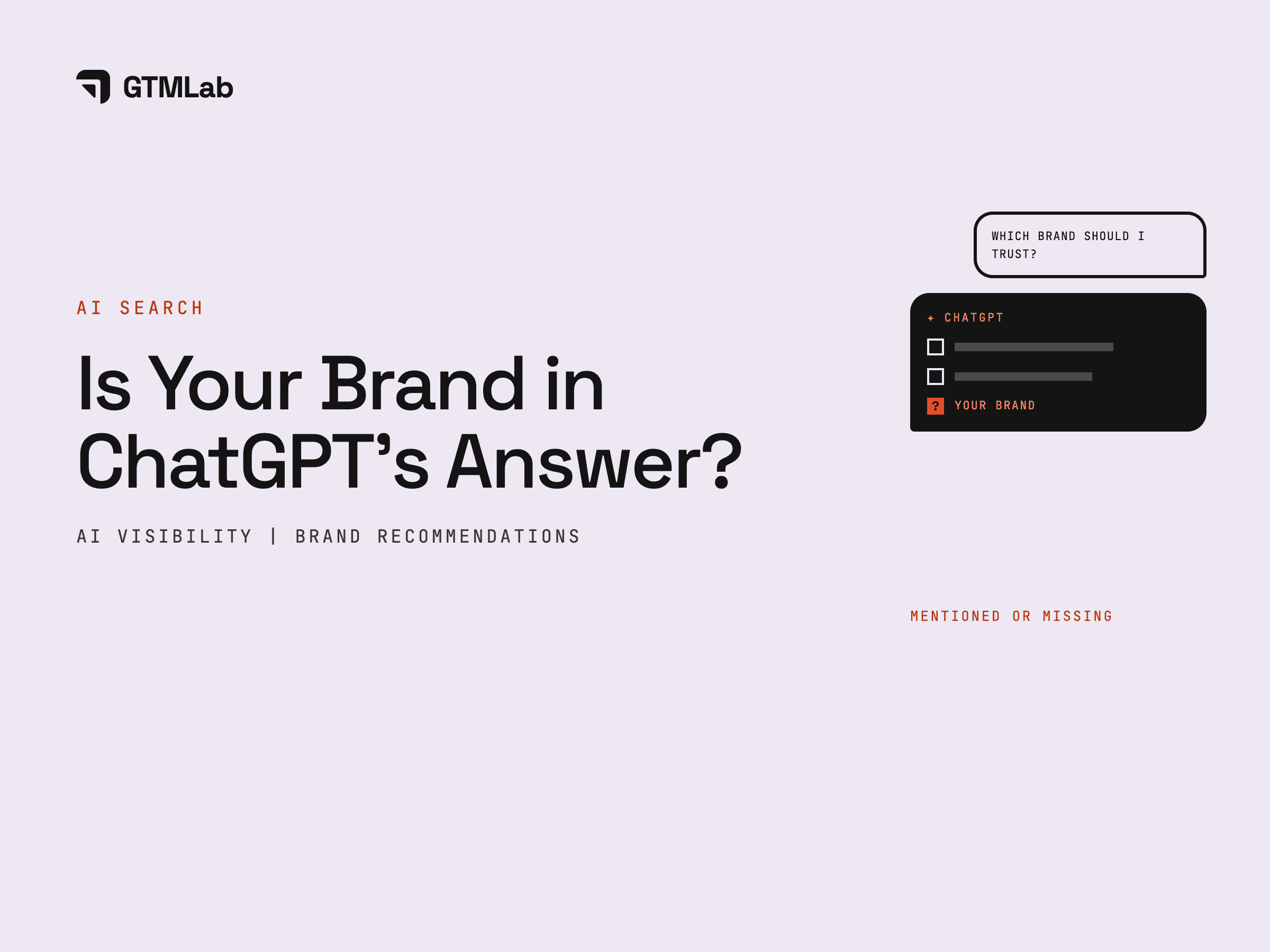
Nowadays, AI visibility has become more important as people start using Gen-AI platforms like ChatGPT to ask for recommendations of products andservices. Unlike traditional search rankings, AI-generated answers can vary depending on the prompt, platform, and information available to the model. A strong presence in Google search results doesn’t automatically mean your brand will appear in ChatGPT’s answers.
Understanding your AI visibility levels starts with tracking how often your brand is mentioned, which sources support those mentions, and how your presence compares with competitors. These insights can help you identify visibility gaps and determine what to improve.
What Does AI Visibility Mean?
AI visibility refers to how often and in what context a brand appears in AI-generated answers. In this sense, you can discover the visibility of a brand from AI responses about product recommendations, brand comparisons, and cited sources. As different AI tools create different answers, LLM visibility works in describing how visible a brand is across large language model-powered platforms, such as ChatGPT, Gemini, and Perplexity.
In ChatGPT, you can consider three different responses to a potential customer’s question:
- No mention: ChatGPT recommends several competitors without including your brand.
- Brand mention: Your business appears in a list of relevant companies, but the response offers little explanation of what makes it suitable.
- Supported recommendation: ChatGPT identifies your brand as a relevant option and, where applicable, provides a source that users can explore to learn more.
Each outcome represents a different opportunity. A mention can introduce your business to a new audience, while a well-supported recommendation may give potential customers a clearer reason to consider it.
Building a Prompt Set
If you want to know whether ChatGPT recommends your brand, start by asking questions that resemble the ones your customers might actually use to check your AI search visibility result organically. A more useful prompt set covers several stages of the customer journey.
| Prompt Category | Example Prompt | What it Reveals |
|---|---|---|
| Problem discovery | “What tools can help a B2B team understand its marketing performance?" | Whether your brand appears when users explore solutions. |
| Category discovery | “What are the leading marketing analytics platforms?” | Whether your brand is included in category-level recommendations. |
| Comparison | “Compare marketing analytics platforms for a mid-sized SaaS company.” | How your brand is positioned against competitors. |
| Purchase intent | “Which marketing analytics platform is best for a company with a small marketing team?” | Whether your brand appears in a more specific buying scenario. |
| Brand perception | “What are the strengths and limitations of [Brand].” | How AI describes your business and its perceived positioning. |
You can apply these examples for your business when analysing your audience and their actual buying criteria. A broad list of generic prompts may produce activity to track without revealing much about your business’ visibility among the customers you want to reach.
Metrics to Track
It is best for your business to have AI visibility metrics that show how consistently your brand appears and whether AI-generated answers represent your product accurately. You can start by looking through the measurements below.
Brand Mention Frequency
This method measures how often your brand appears across the prompts you test. It is useful for comparing results over time, provided the prompts and testing conditions remain reasonably consistent. However, it isn’t a universal visibility score, nor does it represent the percentage of all ChatGPT users who see your brand.
Share of Voice
Using this measurement, you’ll be able to compare your brand’s presence with competing brands within a defined set of AI responses. When measuring this process, a simple method that you can follow is comparing the number of responses mentioning your brand with the number mentioning competitors.
Citation Frequency
This measurement tracks how often your website or other relevant sources are cited in AI-generated responses. This part is particularly useful when a platform provides source links. A citation can indicate that your content contributed to an answer, but it doesn’t necessarily mean your brand was recommended.
You can track citations separately from brand mentions to understand both forms of visibility.
Recommendation Context and Sentiment
Reviewing context helps you identify whether AI responses communicate your intended positioning. Sentiment labels can help organize the results, but automated sentiment analysis should be checked against the actual responses, particularly when industry-specific language is involved.
Competitor Visibility
Track which competitors appear most frequently, which sources are cited in their recommendations, and which customer questions trigger their mentions. This provides a practical starting point for understanding the difference between your brand’s current presence and the visibility you want to achieve.
Manual, Tools, and Managed Tracking
Your next step in analysing AI visibility can be done by these methods: running the process manually, using an AI search visibility monitoring tool, or working with a managed service. It is important to note that each approach serves a different purpose, depending on how often you need insights and how much analysis your team can handle.
Manual tracking can be a reasonable starting point if you want to investigate a small number of prompts. Your team can test questions directly on AI platforms, record the answers in a spreadsheet, and then review the results.
AI visibility tools can help automate parts of the operation. Through this method, your analysis can be easier to maintain using the recurring measurement process.
Lastly, managed tracking adds a layer of analysis and strategic interpretation. It means having a specialized team or briefing your analysis with an AI search optimization agency on your behalf. This method can both connect visibility monitoring with content research and optimization priorities.
The key distinction is not that one option is inherently better than another. It’s whether your team needs data collection, actionable interpretation, or both.
| Approach | Best Suited For | Main Consideration |
|---|---|---|
| Manual tracking | Initial audits and small prompt sets. | Requires ongoing hands-on work. |
| AI visibility tools | Recurring monitoring and larger datasets. | Reporting quality and measurement methods vary. |
| Managed tracking | Teams that need analysis and strategic direction. | Scope, deliverables, and expertise should be evaluated. |
You can use manual tracking for an early-stage assessment to identify obvious gaps. When the monitoring expands, automation can reduce repetitive work. If the goal is to translate findings into a coordinated content and visibility strategy, managed support may be worth considering.
Turning Gaps into a Content Plan
Identifying AI visibility gaps helps you understand why competitors appear in certain responses while your brand does not. For instance, your brand may appear in general product recommendations but be absent from prompts comparing solutions for enterprise customers.
You can start by identifying these gaps that focus on three areas, such as:
- Identify the prompts where your brand is missing.
- Investigate the sources behind the answers.
- Turn the findings into specific content actions.
These actions should complement your existing SEO and content strategy rather than replace it. Clear site architecture, useful content, accessible information, credible evidence, and relevant third-party references can support discovery across multiple channels.
It is important to note that publishing more content alone won’t ensure inclusion, and a citation from one response doesn’t guarantee future visibility. However, the goal is to make your business easier to understand and systematically test whether those improvements correspond with better results.
From AI Mentions to Brand Growth with GTMLab
You need more than occasional ChatGPT searches if your business is looking to improve visibility.
With GTMLab, your business can approach this challenge by connecting AI visibility insights with a more structured GEO strategy. The objective is to understand how your brand is represented and translate those findings into practical optimization priorities.
Our team views AI search visibility as more than a metric to monitor. It becomes a strategic opportunity to strengthen your brand’s presence where potential customers are searching for answers and recommendations.
If you need support for your brand’s visibility across AI-powered search, talk to the team about where your brand visibility growth is stuck.
Frequently Asked Questions
- Does ChatGPT use Google rankings to recommend brands?
Not directly, Google rankings and ChatGPT recommendations are different outcomes. ChatGPT may use web search and information from accessible sources to generate answers, depending on the features being used.
- Can a small business compete with established brands in AI search?
Yes, of course. Smaller businesses can improve their chances of being discovered by clearly communicating their expertise, serving specific customer needs, and building credible online references.
- Does AI visibility affect customer trust?
It can influence how customers perceive a brand, particularly when AI-generated answers explain why a business is relevant to their needs. However, customers may still evaluate reviews, independent sources, product details, and other evidence before making a decision.
- Can I control how ChatGPT describes their brand?
You cannot directly control ChatGPT’s responses, but you can make your brand information clearer and more consistent. Maintaining accurate product pages and company profiles, as well as other public information, can help reduce ambiguity.


