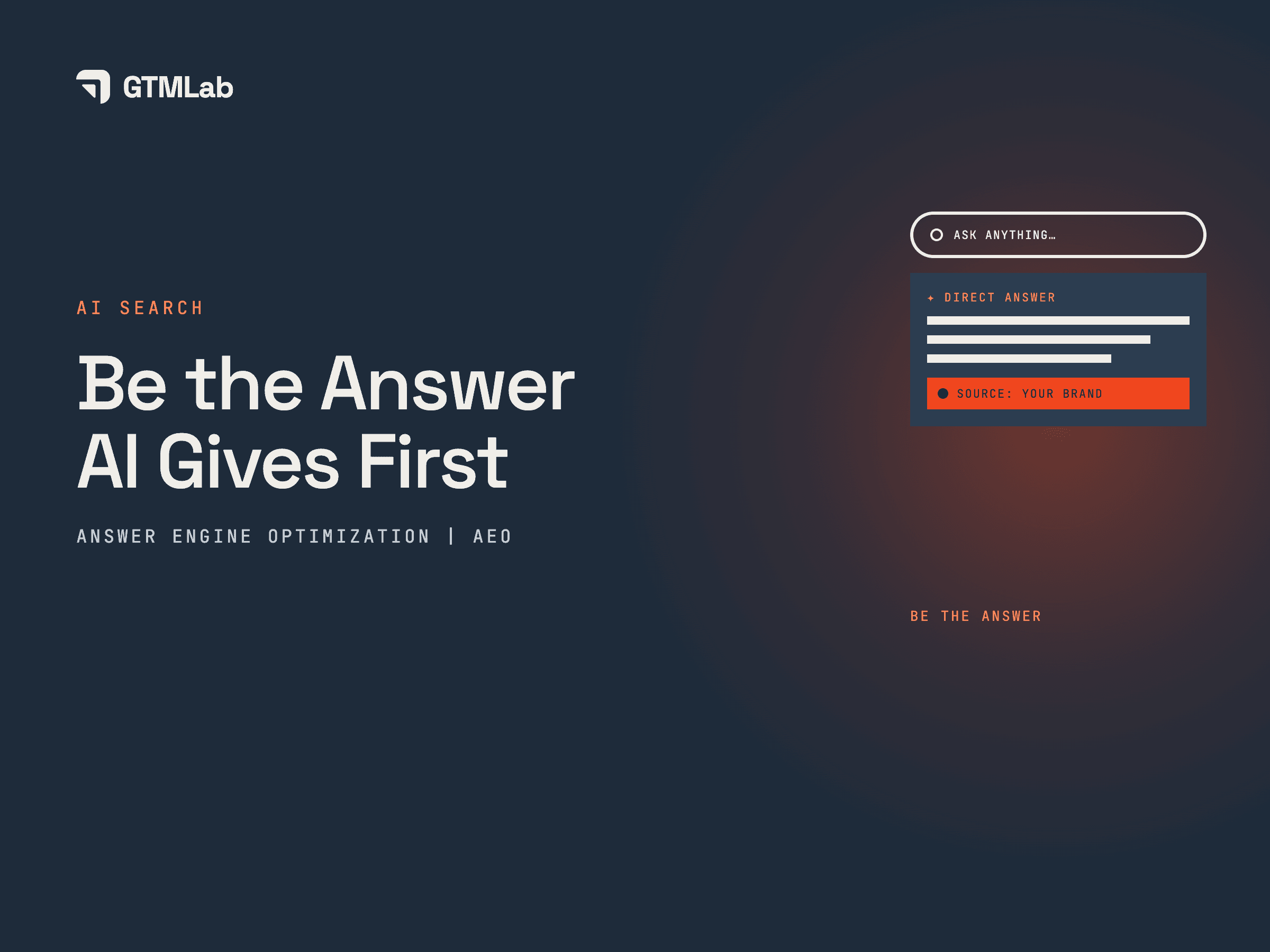
A potential customer might ask an AI assistant to recommend software for their business, compare service providers, or explain which solution best fits their needs. In response, the platform may present a shortlist of brands and supporting information without requiring the user to browse multiple websites. For businesses, being part of that conversation is becoming an important consideration in digital visibility.
Answer Engine Optimization (AEO) can help you prepare your content for this shift by making information easier to interpret, relevant to user questions, and useful for AI-generated responses.
You need to understand how AEO works, what makes content useful to answer engines, and which optimization mistakes may prevent your brand from being discovered.
What is Answer Engine Optimization?
Answer Engine Optimization (AEO) is a practice of improving digital content so answer engines can find, understand, and potentially use it when responding to users’ questions.
You can see this optimization feature in AI-powered tools such as ChatGPT, Gemini, and Google’s AI Overviews. These platforms may draw on information from multiple sources to generate responses, summarize topics, or recommend solutions.
Unlike traditional search results, AI-generated answers can give users information directly. This means you need to consider not only whether your pages appear in search results but also whether your content provides useful information that AI systems can reference.
AEO vs SEO
Both AEO and Search Engine Optimization (SEO) share the goal of helping people discover relevant content, but they approach visibility differently.
| Aspect | SEO | AEO |
|---|---|---|
| Primary goal | Improve visibility in search results | Increase the chance of being referenced in AI-generated answers |
| Where content appears | Traditional search results and other search features | AI assistants, answer engines, and AI-powered search experiences |
| Content approach | Relevant, optimized content that satisfies search intent | Clear, specific, well-supported answers to user questions |
| Key practices | Keyword research, technical SEO, internal linking, and backlinks | Direct answers, structured content, credible sources, and consistent brand information |
| Performance indicators | Rankings, organic traffic, clicks, and conversions | AI mentions, citations, answer visibility, referral traffic, and conversions where measurable |
What Answer Engines Read
Answer engines do not rely on one universal ranking formula. Different platforms use different retrieval, ranking, and generation systems. Still, you can make your content easier to understand and more useful to reference by focusing on several important elements.
Give Direct Answers Before Adding Context
You should be aware that answer engines need to identify information that addresses a user’s question. Content that gets to the point quickly makes the relationship between a question and its answer easier to understand.
Have a Clear Purpose for Every Section
Clear headings, concise paragraphs, bullet points, and tables help organize information into understandable sections. You can use headings that reflect actual questions or topics your audience cares about. Then make sure each section delivers the information promised by its heading.
You can utilize these formats below:
- Definitions that explain concepts in plain language.
- Step-by-step instructions for processes.
- Comparison tables that clarify differences between solutions.
- Frequently asked questions that address specific user concerns.
- Lists that summarize features, requirements, benefits, or considerations.
These formats can improve readability for both people and automated systems, although no format guarantees inclusion in an AI response.
Back Up Claims With Evidence
Content quality matters when answer engines need to determine which sources are useful for a response. You should support your content’s important claims with reliable evidence and make your expertise clear.
So, make sure to avoid publishing unsupported statements simply because they sound authoritative. Instead, verifiable information gives both readers and answer engines a stronger basis for understanding your content.
Make Your Brand Easy to Identify
This AEO service may encounter information about your business across your website, third-party publications, industry directories, and other online sources.
It is important for your content to maintain consistency across important digital touchpoints. Your website should clearly explain your brand, target audience, services, differentiators, and areas of expertise.
Relevant third-party mentions and independent references may also help establish context around your business. Prioritize accurate information and genuine industry relevance rather than trying to generate mentions without meaningful value.
Make Your Content is Accessible to AI
Useful content cannot help much if systems cannot access or interpret the relevant pages. Thus, make sure important pages are accessible to the search and retrieval systems you want to reach. Review technical issues such as crawling restrictions, broken links, page rendering, and unnecessary duplication.
tructured data can also help describe entities and page content in a standardized format. It is best to use it when appropriate and ensure that the markup accurately reflects the visible information on the page.
Although structured data does not guarantee AI citations or enhanced search visibility, it can still support a clearer understanding of your content.
Common AEO Mistakes That Limit AI Visibility
You should know that publishing content that answers users’ questions does not guarantee AI visibility, but it is still a good starting point for Answer Engine Optimization. Certain content and optimization mistakes can make it harder for answer engines to identify relevant information or for potential customers to discover your brand.
| Common AEO Mistakes | Why It Limits Visibility | How to Improve It |
|---|---|---|
| Burying the answer | Long introductions and vague explanations make the main information harder to identify | Answer the primary question early, then provide supporting details, examples, and context |
| Publishing generic content | Content that repeats existing information without adding value gives readers little reason to choose it over other sources | Include original research, expert insights, practical examples, and industry-specific knowledge |
| Making unsupported claims | Unverified statistics, outdated facts, and exaggerated statements can weaken content credibility | Use reliable sources, verify important claims, and keep information current |
| Ignoring brand visibility beyond your website | Strong website content alone does not show whether your brand appears in relevant AI-generated answers or competitor comparisons | Monitor brand mentions and citations across relevant AI platforms, and review opportunities to strengthen your digital presence |
| Treating AEO as a one-time task | AI responses can vary across prompts and platforms, so a single check cannot establish consistent visibility | Track recurring patterns in brand mentions, citations, and competitor presence, then refine your content strategy over time |
Avoiding these mistakes helps create a stronger foundation for AEO, but you also need a way to evaluate whether your efforts are improving AI visibility. As the number of target topics and AI platforms grows, manual checks can become time-consuming.
Scaling Your Answer Engine Optimization Strategy
You can optimize your AI visibility across search experiences with GTMLAb. Instead of relying solely on manual searches to check whether AI platforms mention your brand, you can use AI visibility insights to identify opportunities and make more informed optimization decisions.
With our team, you can approach AEO as an ongoing strategy rather than a one-time content optimization task.
- Monitor brand visibility: Understand how your brand appears across relevant AI search experiences.
- Analyze competitor presence: Identify competitors that appear in AI-generated answers and explore where your brand may be missing.
- Identify gaps: Find topics and buyer questions that may present opportunities to strengthen your content strategy.
- Prioritize optimization efforts: Use visibility insights to guide content improvements and focus on areas most relevant to your business goals.
Ready to understand how AI search platforms represent your brand? Talk to our team to discover opportunities in AI search and answer engine optimization strategy.
Frequently Asked Questions
Can social media content influence AI visibility?
Social media can contribute to a brand's broader online presence by helping information reach audiences and encouraging discussion or third-party references. However, whether a particular social media post is accessible to or used by an AI platform depends on the platform's data sources and retrieval capabilities.
Does AEO require a separate content strategy for every AI platform?
Not necessarily. Businesses can establish shared content principles, such as accuracy, clarity, and relevance, across their AEO strategy. However, they should evaluate performance on the AI platforms that matter to their audience because each platform may retrieve information and generate answers differently.
Can existing website content be optimized for AEO?
Yes. Businesses can review existing articles, service pages, product descriptions, and FAQs before creating new content. Improving unclear explanations, adding relevant evidence, updating outdated information, and addressing unanswered customer questions can make existing pages more useful for readers and potentially more suitable for AI-generated answers.
How can businesses decide which topics to prioritize for AEO?
Start with questions closely related to your audience's needs, product category, and buying decisions. Consider the relevance of each topic to your business, the quality of your existing content, and whether competitors are frequently mentioned in AI responses about that subject.


