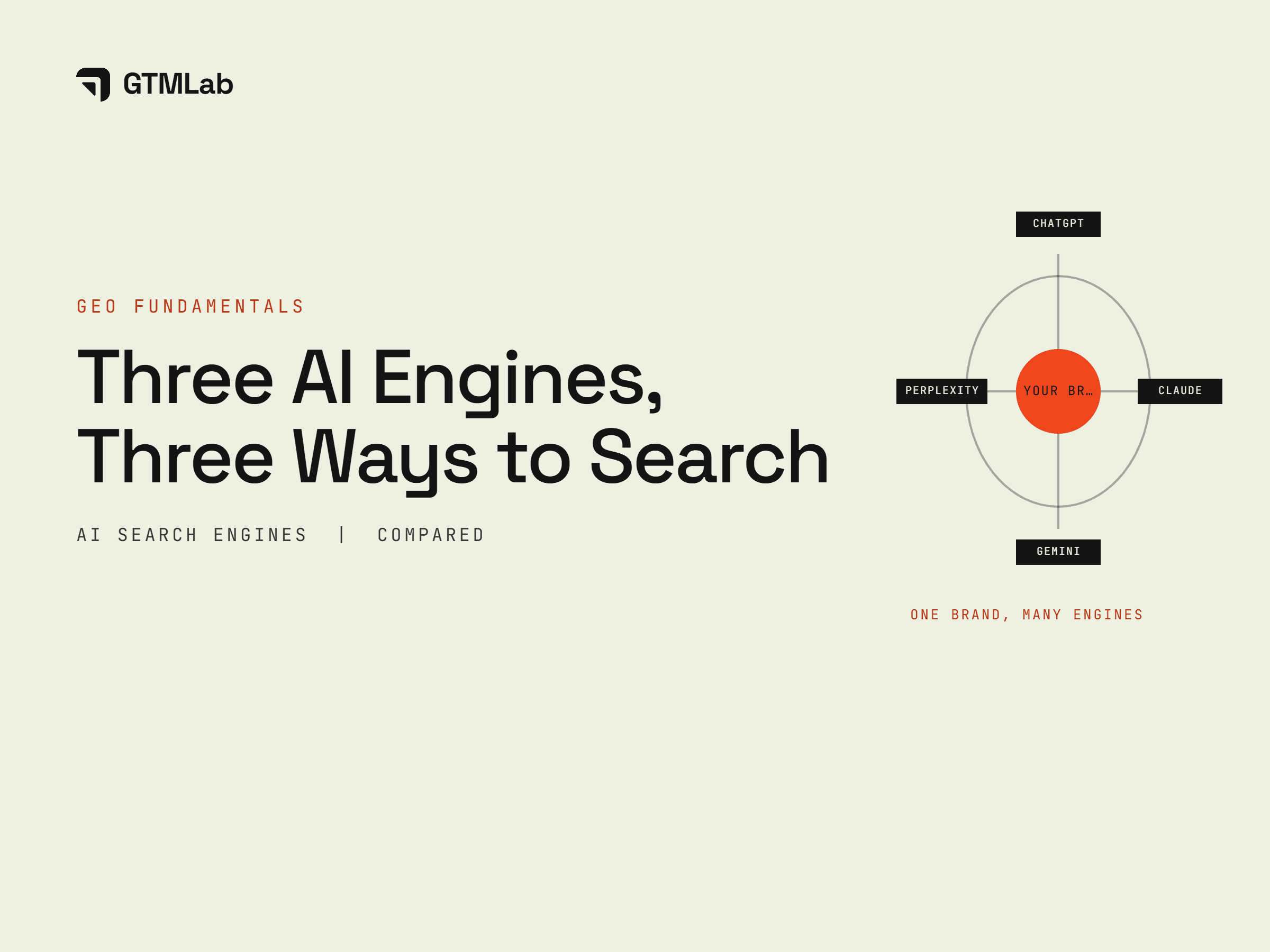
To put it briefly, these three AI assistants can provide search results by having significant research and resources. ChatGPT can search the web automatically or on request. Gemini can ground some responses in Google Search, while Perplexity offers search and more extensive research experiences. Their source links also need to be read differently, making the search settings and supporting pages useful starting points for comparison.
For your business, the useful question is how accurately each platform describes what you offer. Does it understand who your service suits? Can a reader check the supporting information? And does the answer help someone take the next step?
Three AI Platforms, Different Search Experiences
This comparison focuses on ChatGPT Search, the Gemini app and Perplexity Search. Google AI Overviews and AI Mode are separate experiences within Google Search, so keep their results separate when reviewing visibility.
| Platform | Use of web information | Presentation of sources |
|---|---|---|
| ChatGPT Search | Web search can run automatically or when selected. | Responses may include citations; Sources can also contain other relevant links. |
| Gemini App | Some responses are grounded in Google Search results. | Sources and related links may appear; not every response includes them. |
| Perplexity Search | The documented Pro Search workflow searches and synthesises web information. | Source links accompany the answer for verification and further reading. |
ChatGPT lets you move between a question, a web search and follow-up discussion. OpenAI explains that search responses may include citations, while the Sources panel can also contain other relevant links. These are worth checking separately: a relevant page is not automatically evidence for every sentence in the response.
Meanwhile, Gemini also provides sources and related links, but Google says these do not appear in every response. For an AI visibility review, record both what the answer says and which links are actually available.
Perplexity describes its Pro Search workflow as searching the web, synthesizing information and providing source links. Its documentation also distinguishes standard search from more extensive research, making the selected experience an important part of your comparison.
Where Their Answers Come From
Understanding how AI search engines work helps you separate two questions: what information a system finds and what it writes using that information. A useful source can still be summarized incompletely, while a confident explanation can leave important conditions unclear.
The relationship between retrieved information and generated text is central to retrieval-augmented generation (RAG). Retrieved material gives a system additional context for developing its response. The practical task for a reader is to check whether the resulting explanation stays faithful to that material.
The source presentation also deserves attention. Google describes Gemini’s links as sources and related content. For this comparison, focus on the public web links and check what each one actually establishes before treating it as evidence for a specific claim.
Suppose an answer says a hotel has a separate bedroom for children. Open the linked room page and check that detail. A page describing the hotel’s kids’ club would not establish the sleeping arrangement, even though it concerns the same property.
Why Can the Same Question Produce Different Results?
The same wording does not necessarily create the same search conditions. ChatGPT may turn a question into targeted search queries and use relevant memory or location information. Perplexity offers different search modes and model choices. These factors can influence the information gathered and the response you receive.
The answer alone also cannot explain why a platform included certain businesses or left others out. Reviewing its supporting sources helps you assess what information is available, which claims are supported and where important details remain unclear.
When choosing prompts for GEO, focus on questions your customers actually ask. Keep the wording, language and intended location consistent across platforms, and record the date, search mode and relevant personalization settings.
Repeat important checks before drawing conclusions. Consistent testing helps you distinguish a recurring pattern from a single response and gives your team a clearer basis for deciding what to investigate next.
Building Content That Helps Across Platforms
You can start with providing information about your business and decide whether it suits the customer’s needs. Explain what you offer, who it is for, and any conditions that affect their decision. Keep essential details on the pages where readers would expect to find them.
Make your claims easy to verify. Use specific descriptions, support factual statements with relevant evidence and keep business information consistent across your website. Clear headings and contextual internal links should help readers move between related information without losing the details they need.
Check technical accessibility alongside the wording. Google’s guidance for AI Overviews and AI Mode recommends crawlable pages, useful internal links and important information available as text. Existing SEO fundamentals remain relevant, without requiring special AI markup.
Lastly, use your platform comparison to prioritize these improvements. Identify which facts are missing, unclear or outdated, then update the relevant pages. This turns the review into a practical content plan while keeping each change useful to the people visiting your website.
Looking Beyond Mentions to Sources and Recommendations
Compare the platforms using the same reporting definitions:
| Outcome | What to record |
|---|---|
| Brand mention | Your business is named in the response. |
| Recommendation | Your business is presented as a suitable option for the stated need. |
| Citation or source link | A link points to your website or another page discussing your business; record its role. |
| Factual accuracy | The response describes the relevant product, service or conditions correctly. |
| Website visit or enquiry | Your analytics or enquiry records identify a subsequent action, where attribution is available. |
Imagine an answer recommends your business but supports its description with an OTA page. Record the recommendation and the third-party source separately. If your page is linked without the product being recommended, record that distinction too.
Keep the exact prompt, saved answer and linked URLs alongside those findings. You can then compare whether each platform gets the facts right, recommends the business for the stated need and provides a useful next step.
Frequently Asked Questions
Should I compare regular search with Deep Research?
Compare equivalent experiences first. Perplexity describes Deep Research as an option for longer, report-style answers. Mixing that with a quick search on another platform makes it harder to interpret differences in depth or source coverage.
Does selecting an OpenAI or Gemini model in Perplexity reproduce the original app?
Do not assume the experiences are equivalent. Perplexity documents its own search and synthesis workflow around model selection. The practical inference is that choosing a model alone does not establish that you are testing the same experience as its provider’s app.
Should I publish separate versions of a page for each platform?
Start with one accurate page that answers the customer’s question well. Create additional pages when different audiences, locations or services need distinct information. Review platform differences to improve the relevant content rather than duplicating a page solely to change the platform name.
How often should I repeat the comparison?
For a small initial review, a monthly check provides a manageable routine. Add checks after substantial changes to your services, website or business information. Keep the testing conditions consistent, and repeat an unexpected result before treating it as a trend.


