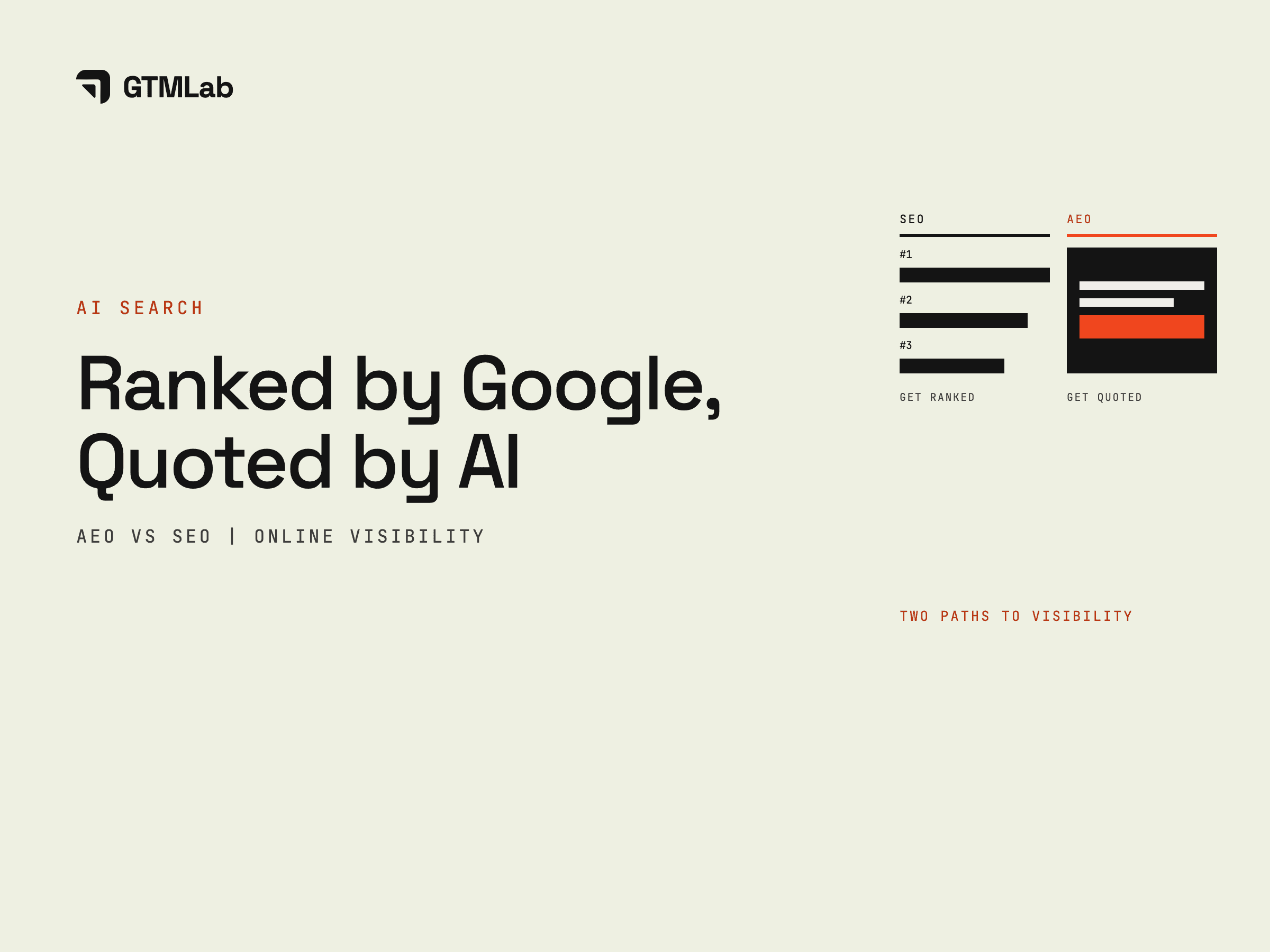
Getting your website to rank on Google is no longer the only way to reach potential customers. As AI-powered search becomes part of how people research products, evaluate services, and find recommendations, it’s important for you to also consider how your content appears in AI responses.
This development has brought Answer Engine Optimization (AEO) into discussions alongside the more established Search Engine Optimization (SEO). Their approaches to content discovery are different, but they share the goal of connecting users with relevant information.
Through this article, you will explore how AEO vs. SEO can help you understand these AI search changes and build a search strategy that accounts for both.
Understanding AEO and SEO in Today’s Search Landscape
Search Engine Optimization (SEO) is a practice of improving a website’s performance in organic search results. It mostly focuses on factors such as keyword relevance, search intent, backlinks, website structure, and page experience. The goal is to attract organic traffic by helping relevant pages appear when people search for information, products, or services.
Meanwhile, Answer Engine Optimization (AEO) is about making content easier for answer engines and AI-powered platforms to understand, retrieve, and use when responding to user questions. It aims to make a brand’s information more accessible in direct answers, AI responses, and answer-based search experiences. This practice often involves creating clear and informative content, addressing specific questions, organizing information logically, and establishing brand credibility.
Both of these practices are important in helping the right audience discover useful and relevant information. Thus, understanding the differences between AEO vs SEO is increasingly important when planning your search strategies.
AEO vs SEO
The main difference between AEO and SEO lies in how each approach helps content reach its audience. Here is how the two approaches compare:
| Comparison Factor | SEO | AEO |
|---|---|---|
| Primary Goal | Improve organic search rankings and attract website traffic | Increase the chances of content being used in direct answers |
| Main Platforms | Google, Bing, and other search engines | AI assistants and answer engines |
| Content Approach | Optimize content around keywords, topics, and search intent | Provide clear, structured, and relevant answers to user questions |
| Visibility Format | Organic listings, featured snippets, and other search features | AI-generated answers, citations, and answer-based results |
| Key Metrics | Keyword rankings, organic traffic, click-through rates, and conversions | AI mentions, citations, answer inclusion, and referral traffic |
SEO helps you attract users who browse search results and click through to relevant websites. AEO extends this opportunity by preparing brand information to be understood and potentially referenced by platforms that generate answers directly.
Combining Both Practices for Better Search Visibility
The relationship between AEO vs. SEO becomes clearer when looking at how you create and evaluate your content. Rather than developing different materials for every platform, marketers can make several adjustments to their existing approach.
Build Content Around Topics
A keyword may bring users to a page, but the information within that page determines whether it actually addresses their needs. Start with the broader topics your audience researches, then identify the questions, concerns, and comparisons they are likely to explore along the way.
Give Important Information a Clear Place in Your Content
When building a page, you should put essential explanations where readers can find them, use descriptive headings to introduce different topics, and include supporting details where they add value. This approach serves visitors who scan web pages as well as answer engines that need to identify relevant information within a larger piece of content.
Make Your Brand a Reliable Source of Information
You can improve this aspect by publishing original insights, including relevant evidence, identifying authors where appropriate, and keeping company information consistent across your website and other digital channels. These practices also contribute to the trust and authority that support long-term AI visibility performance.
Ensure Your Website Can Be Properly Accessed and Understood
Search engines need to crawl and index relevant pages, while AI-powered systems may rely on accessible web content and other available sources to retrieve information. So, you can review your website's crawlability, page performance, mobile experience, internal links, and structured data. These elements help establish a technical foundation for discoverability across different search environments.
Look Beyond Rankings When Evaluating Results
It is important for you to evaluate both sides of your search performance. Alongside traditional metrics such as impressions, clicks, rankings, and conversions, monitor how often your brand appears in relevant AI responses, which sources are cited, and whether its information is accurately represented.
Should Your Business Prioritize AEO or SEO?
The decision depends on your business objectives, target audience, and current digital presence. Neither approach needs to replace the other, but understanding where to focus your resources can help you build a more effective strategy.
SEO can be a suitable choice when your primary goal is to attract organic traffic, improve keyword rankings, and generate website visits. On the other hand, if your audience uses AI assistants and answer engines to research topics or seek recommendations, you can prioritize an AEO strategy.
However, for many businesses, the most practical approach is to establish a strong SEO foundation while gradually incorporating AEO into their content and digital marketing activities.
Stay Relevant in AI Search with GTMLab
As search experiences continue to evolve, you need a clearer understanding of how your brand appears across AI-powered platforms. Traditional SEO performance does not necessarily show the full picture of how AI assistants mention, recommend, or reference a brand.
This is where GTMLab can support your AI search strategy. Our team can help identify opportunities and make more informed decisions about your optimization efforts.
So, if your business is struggling to improve its visibility across AI-powered platforms, you can contact our team to start developing your strategy.
Frequently Asked Questions
Does website domain authority affect AEO performance?
Yes. A website's authority and credibility can influence how AI platforms assess its content. Consistently publishing reliable information and earning references from reputable sources can help strengthen your brand's credibility.
Does social media activity influence AEO?
Social media can contribute to brand awareness and provide additional sources of information about your business. However, social engagement alone does not guarantee that AI platforms will mention or recommend your brand.
Can outdated website content affect how AI platforms represent a brand?
Yes. Outdated information can lead to inaccurate brand descriptions or recommendations when AI platforms retrieve older sources. Regularly reviewing product details, company information, and published content helps reduce this risk.
Do backlinks still matter when optimizing for AI search?
Yes. Backlinks can help establish website authority and support traditional SEO performance. References from relevant and credible websites may also contribute to your brand's broader online credibility, although they do not guarantee AI citations.


